
Bingham Restoration Resources
Basement Flooding Cleanup: A Homeowner's Step-by-Step
Published May 26, 2026
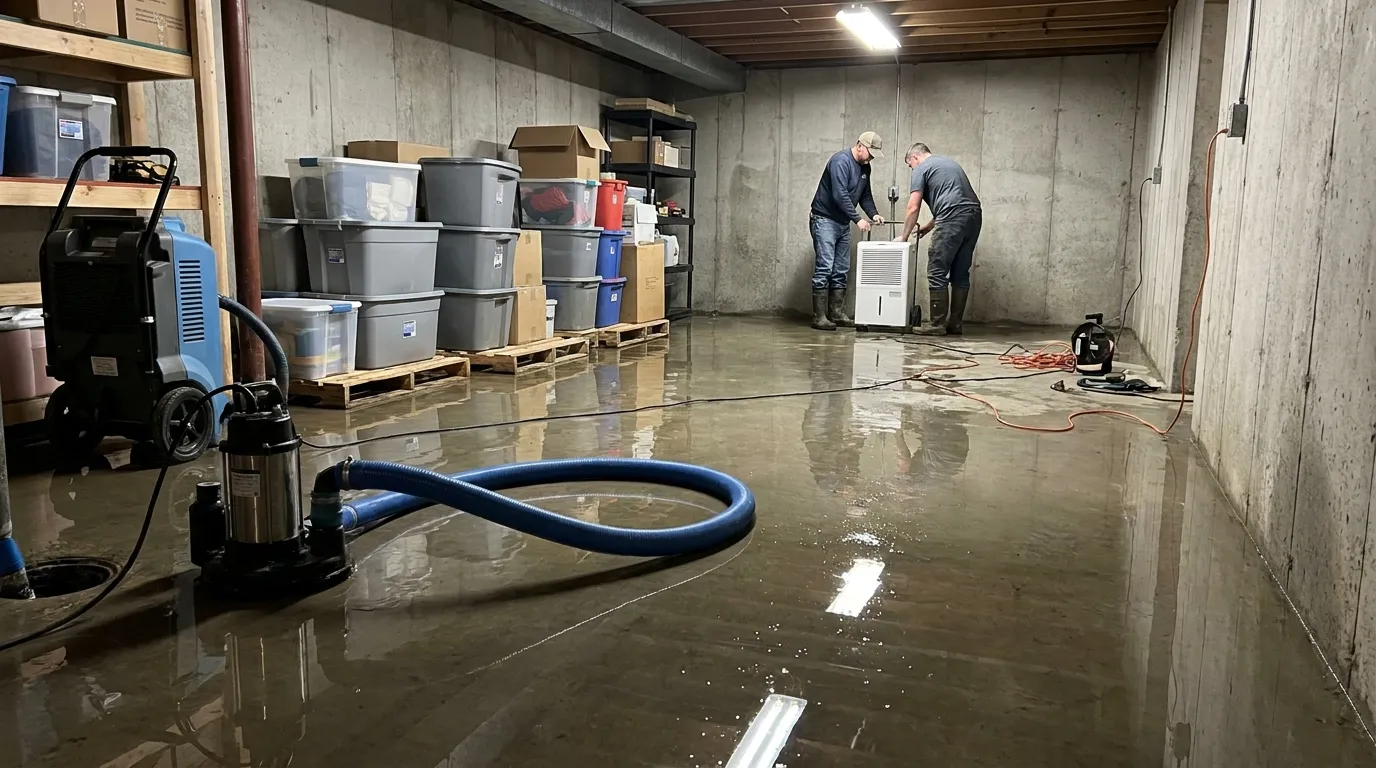
A flooded basement is one of the most stressful losses a homeowner faces. The space is dark, the water depth is hard to judge, and the source is often hidden. This guide walks through the exact sequence we follow on basement flooding calls so you can act with confidence in the first hour and avoid the mistakes that turn a $4,000 cleanup into a $20,000 rebuild.
Step 1: Cut the Power Before You Step In
Basements are full of electrical hazards: furnaces, water heaters, panels, sump pumps, and outlets near the floor. If water has reached any of those, electrocution risk is real. Flip the main breaker from a dry location upstairs before going down. If the panel itself is in the basement and you cannot reach it without entering water, stop and call your utility or an electrician along with us. No belongings are worth the risk.
Step 2: Identify the Source
The cleanup approach changes completely depending on where the water came from.
- Burst pipe or appliance failure. Clean water, internal. Shut the supply at the main valve.
- Sump pump failure. Usually clean groundwater that has been sitting briefly. Treat as Category 2.
- Sewer backup. Category 3. Stay out of the water entirely.
- Outside groundwater intrusion from heavy rain. Category 3 by default, because surface water has crossed soil, foundations, and possibly the sewer system.
- Hot water heater rupture. Clean water, but the volume can be 40 to 80 gallons in minutes.
If you cannot identify the source, photograph the standing water from the top of the stairs and call us before going further.
Step 3: Document for Insurance
Before anything moves, photograph and video everything. Wide shots of the standing water, close-ups of saturated belongings, serial numbers on the furnace and water heater if they are affected, and the apparent source of entry. Your insurance adjuster will ask for this, and reconstructing it later costs you coverage.
For a deeper dive into how documentation drives claim outcomes, see our guide to insurance and water damage.
Step 4: Call a Certified Crew
Call Bingham Restoration at 520-FLOODED. We average 48 minutes from dispatch to on-site arrival and are equipped for all three water categories. While you wait, do not pull a wet shop vac out of the garage and start working in standing water. Combining electricity, water, and a homeowner is the most common injury we see on basement calls.
Step 5: Extraction, Then Demolition, Then Drying
Professional basement cleanup runs in a specific order:
- Extraction with truck-mounted vacuums that move thousands of gallons per hour.
- Content evaluation and pack-out for items that can be saved through cleaning.
- Selective demolition of saturated drywall (cut to 12 to 24 inches above the waterline), wet insulation, and unsalvageable flooring.
- Antimicrobial treatment on Category 2 and 3 losses.
- Structural drying with air movers and commercial dehumidifiers, monitored daily with moisture meters until materials reach equilibrium.
- Verification of dryness before reinstallation begins.
Skipping any step, especially verification, is how basements end up with hidden mold three months later.
What Homeowners Most Often Get Wrong
- Leaving wet drywall in place because it “looks fine.” The paper face wicks moisture upward and feeds mold within 48 hours.
- Running only household fans. They move air but do not pull moisture out of the structure. Without a dehumidifier, you are circulating wet air.
- Throwing soaked carpet pad back down. Pad almost never comes back. Carpet sometimes can with proper cleaning.
- Reinstalling baseboards too early. If the wall framing is not at equilibrium moisture content, mold finds the cavity.
When to Worry About the Foundation
If water entered through a foundation crack, the repair is its own scope outside restoration. We will document the entry point in our report so your structural contractor or waterproofing company has the visual record they need.
Related Services
Bingham Restoration handles every phase of water damage restoration, from extraction to reinstallation. Call 520-FLOODED if you have standing water in a basement right now.
Frequently Asked Questions
How long does it take to dry out a flooded basement?
With professional extraction and commercial drying equipment, most residential basements are structurally dry in 3 to 5 days. Drying with household fans alone typically takes 2 to 4 weeks and almost always leaves enough residual moisture for mold to colonize.
Is the water in my basement contaminated?
Probably yes if it entered from outside groundwater, a sewer backup, or a sump pump failure. Treat any water from those sources as Category 3 and stay out of the standing water until a crew with proper PPE arrives.
Will my insurance cover a flooded basement?
Standard homeowners policies cover sudden internal failures like a burst pipe or hot water heater leak. They generally do not cover water entering from outside the home, which usually requires a separate flood insurance policy. Sump pump backup is covered only with a specific endorsement.
Need Emergency Restoration Right Now?
Our crews arrive in 48 minutes on average and bill your insurance directly.
Call 520-FLOODED