
Bingham Restoration Resources
Ceiling Leak Repair: What It Actually Costs and Why
Published June 10, 2026
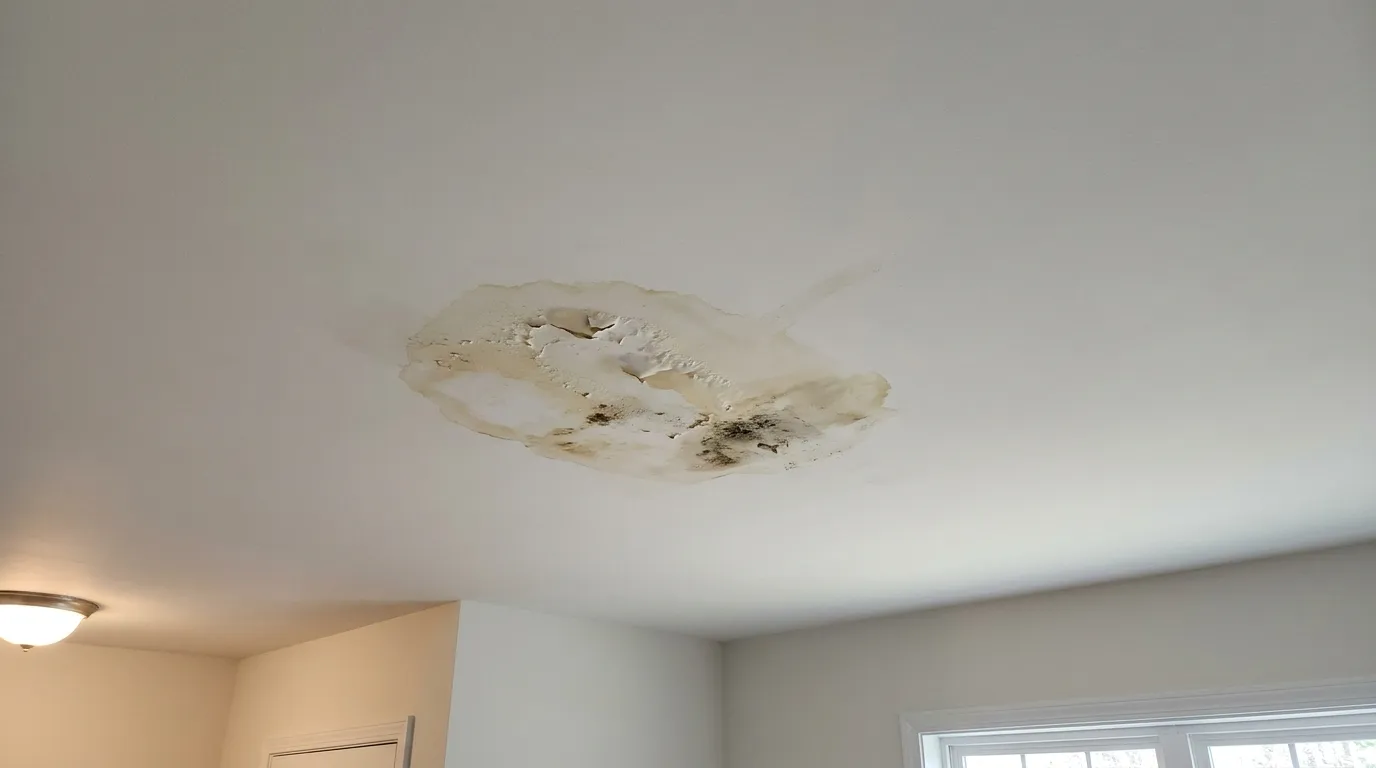
A ceiling stain is one of the most common calls homeowners place to a restoration company, and also the one where the gap between a real fix and a cover-up is widest. This guide explains exactly what a proper ceiling leak repair involves and where the cost actually goes.
Step 1: Find the Source
The visible stain rarely sits directly under the leak. Water travels along joists, framing, and the back side of drywall before it surfaces. Common source patterns:
- Bathroom above. Wax ring failure, tub overflow, or shower pan leak.
- Roof. Failed flashing at a chimney, skylight, or vent boot; missing shingles after storm or hail.
- HVAC. Condensate drain blockage in an attic air handler.
- Plumbing. Slow drip from a supply or drain line in the cavity above.
A proper diagnosis uses moisture meters, thermal imaging, and sometimes a small exploratory opening. Guessing wastes the homeowner’s money on a repair that fails immediately.
Step 2: Stop the Source
The leak must be permanently repaired before any ceiling work begins. We coordinate the roofer, plumber, or HVAC tech and document the repair as part of the file your insurance carrier needs.
Step 3: Open the Cavity
Once dry, hidden damage looks like nothing. Once wet, every minute matters. We open the affected ceiling section to:
- Confirm framing is dry to equilibrium.
- Remove and discard saturated insulation.
- Check for hidden mold colonization.
- Inspect joists for staining or fastener corrosion.
This is the step homeowners most often skip with patch crews, and the step that makes the difference between a one-time repair and a recurring callback.
Step 4: Dry the Cavity
Air movers directed into the opening, with a commercial dehumidifier in the room, until the framing reaches equilibrium moisture content. Usually 2 to 4 days. Reinstalling drywall before this is done seals moisture into the cavity.
Step 5: Restore the Ceiling
- Cut and hang fresh drywall, screwed to the same joists.
- Tape, mud, and feather the seams.
- Match the original texture — knockdown, orange peel, popcorn, or smooth.
- Prime the entire affected area with a stain-blocking primer.
- Topcoat to match the ceiling color.
The texture match is the step that visually separates a professional repair from a patch job. The wrong texture pattern shows the repair from across the room.
Where the Cost Goes
For a typical 4-by-4 foot ceiling repair with cavity drying and one bedroom worth of restoration:
- Diagnosis and source coordination: $150 to $300
- Demolition and disposal: $200 to $400
- Drying equipment, 3 to 5 days: $400 to $900
- Drywall, texture, prime, paint: $700 to $1,500
- Documentation and insurance coordination: included in our scope
For more on how restoration projects price overall, see the water damage cost breakdown.
When a Ceiling Repair Becomes a Bigger Scope
- Sagging drywall that has lost structural connection to the joists.
- Mold visible in the cavity once opened.
- Damaged or rotted framing.
- Affected recessed lights, smoke detectors, or HVAC registers.
We scope these honestly. If a small repair can stay small, we keep it small.
Related Services
Bingham Restoration provides full ceiling leak diagnosis, drying, and restoration as part of water damage restoration. Call 520-FLOODED for an active leak.
Frequently Asked Questions
How much does ceiling leak repair cost?
A simple paint-and-patch on a small dry stain runs $300 to $700. Active leaks with cavity damage typically run $1,500 to $5,000 once the source is fixed, drying is complete, and the ceiling is restored. Larger losses involving insulation, framing, or recessed lights climb from there.
Will the stain come back through new paint?
Yes, unless you use a stain-blocking primer. Water-soluble minerals in the original stain bleed through standard topcoats within days. We prime with an oil- or shellac-based blocker before texture and paint.
Do I need to fix the leak before the ceiling repair?
Always. Repairing a ceiling over an active leak is wasted money. We coordinate with your plumber or roofer so the source is fixed first, the cavity is dried, and then the cosmetic repair runs as the final step.
Need Emergency Restoration Right Now?
Our crews arrive in 48 minutes on average and bill your insurance directly.
Call 520-FLOODED