
Bingham Restoration Resources
The Emergency Restoration Timeline: Hour by Hour
Published May 22, 2026
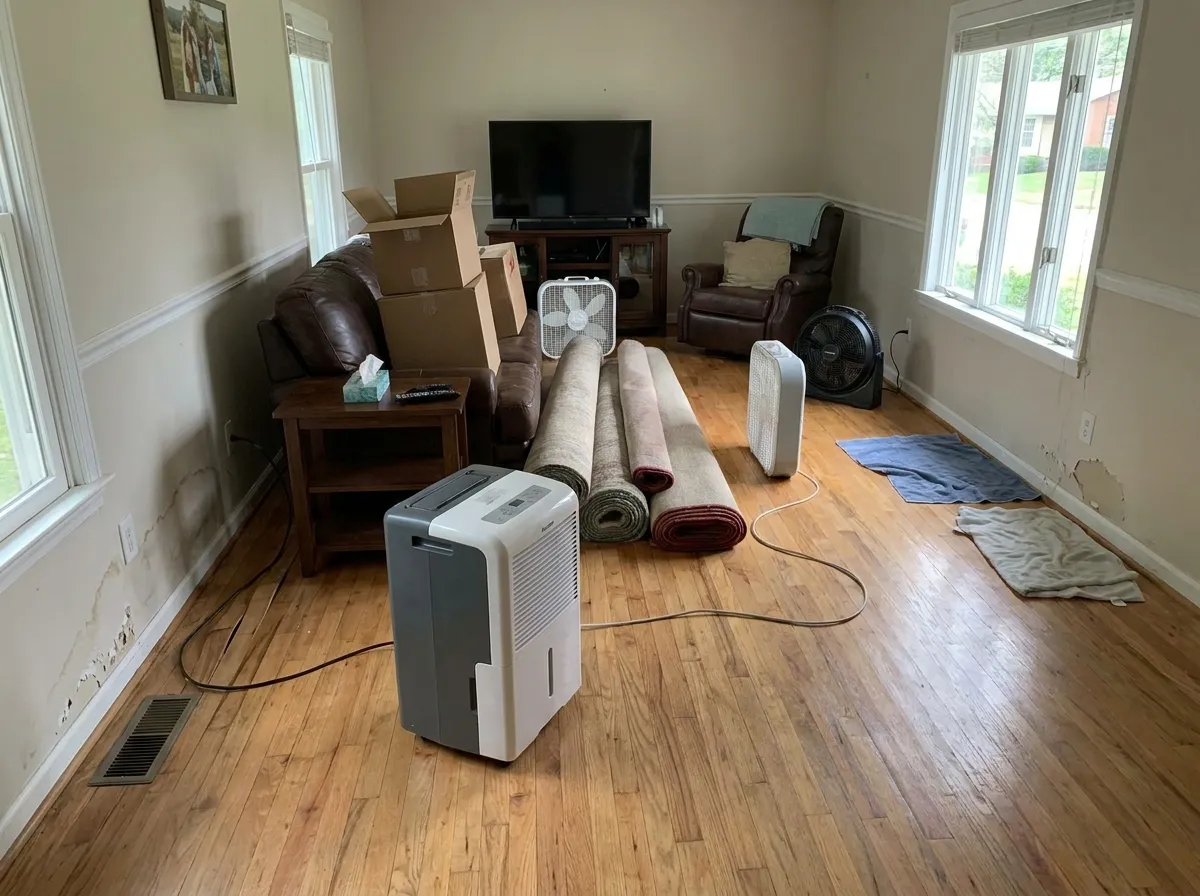
When a water, fire, or mold loss happens, the most common question homeowners ask is not what the project will cost or how long it will take, but what happens next. The restoration industry treats that question like it has an obvious answer, which it does not if you have never been through it. This guide walks through an emergency restoration timeline hour by hour, from the first call through the end of the project, so you know what to expect at every stage.
The specific minutes and hours vary based on the type of loss and its severity, but the overall sequence is consistent. If something in your project is happening out of order or being skipped, that is a signal worth paying attention to.
Minute 0: The First Call
The moment you call a real 24/7 restoration company, three things should happen.
- The phone is answered live. Not a voicemail, not a call-back service, not a national dispatch center that sends the call to a local subcontractor. A real operation has dispatchers answering phones around the clock.
- A crew is dispatched immediately. Before you are off the call, a crew should already be on the way or on the schedule for the soonest arrival window.
- You get guidance for the next few minutes. The dispatcher walks you through what to do while you wait. Stop the water if you can reach a shutoff. Cut power if water has reached outlets. Document with photos. Do not start cleanup.
Bingham’s arrival target is 48 minutes on average across our ten-state service area. The actual arrival time depends on the distance from the nearest crew, the traffic, and the time of day.
Hour 1: On-Site Assessment
When the crew arrives, the first 30 to 60 minutes are spent understanding the scope.
Walk-through with the homeowner. The crew walks every affected room with the homeowner, identifying visible damage and asking about what happened. This is also the moment to share anything you noticed before the crew arrived, including water you saw move through areas that do not look wet now.
Moisture mapping. Moisture meters and thermal imaging identify which materials are wet and how far the water has traveled. On many projects the visible wet zone is smaller than the actual wet zone, and finding the hidden moisture is what prevents a mold problem four weeks later.
Category and class assessment. The crew determines the IICRC Category (how contaminated) and Class (how much of the structure is wet) of the loss. These two variables drive the scope of the drying plan and determine what can be dried in place versus what has to be removed.
Content assessment. Belongings in the wet zone are evaluated for whether they can be cleaned in place or need to be moved to a dry area or packed out for off-site restoration.
Scope and timeline communication. Before the crew starts heavy work, you should know what they plan to do, roughly how long it will take, and what the next 24 hours look like.
Hours 2 to 6: Stabilization
With the scope clear, the crew moves into stabilization. This is the phase where most of the saving happens.
Water extraction. Truck-mounted or portable extraction removes 80 to 90 percent of the total water volume in the first pass. On a significant loss this phase runs for hours and produces the most dramatic visible change.
Selective demolition. Baseboards come off to expose wall cavities for drying. Wet drywall that cannot be dried in place is cut out. Carpet pad that is colonized or saturated is removed. This is done with documentation, not in a rush, because every removal decision has to be defensible on the insurance file.
Drying equipment setup. Air movers and commercial dehumidifiers are placed based on the drying plan. The equipment count depends on the size of the wet zone and the ambient conditions. A whole-home water loss can run 20 or more air movers and multiple large dehumidifiers.
Initial content protection. Belongings in the wet zone are moved to dry areas or staged for pack-out. Furniture legs are lifted onto plastic caps to prevent wicking.
First-day photos and documentation. Every step is photographed. The first-day documentation is the backbone of the insurance claim.
Day 1 Evening: The 24 Hour Plan
By the end of the first day, the crew should have:
- The source of the loss identified and stopped.
- Standing water extracted.
- Selective demolition complete for materials that cannot be dried in place.
- Drying equipment running on the affected areas.
- A documented scope with photos and moisture readings.
- A timeline estimate for the drying phase.
- Initial coordination with your insurance carrier.
You should be able to sleep in the home unless the scope made it uninhabitable. If the home is uninhabitable, the crew should have helped coordinate temporary housing arrangements.
Days 2 to 7: Drying and Monitoring
The drying phase is the quiet phase. Equipment runs continuously, and the crew returns daily to monitor.
Daily moisture readings. Every wet surface is measured each day. The readings go into the project log and track the decline toward baseline moisture.
Equipment adjustments. Air movers and dehumidifiers are moved, added, or removed as the drying progresses. Some rooms dry faster than others, and the equipment follows the work.
Ongoing communication. You should hear from the crew lead or project manager daily. If the project is trending ahead of or behind schedule, you should know.
Insurance coordination. The scope is written up in Xactimate line-item format and submitted to your adjuster. The adjuster either approves the scope, requests adjustments, or schedules their own inspection.
Drying typically takes three to seven days depending on the materials, the size of the loss, and the ambient conditions. A humid climate like Seattle or Nashville extends the timeline. A dry climate like Phoenix or Tucson shortens it.
Week 2 and Beyond: Reconstruction
Once the drying is complete and moisture readings confirm the structure is back to baseline, the project moves into reconstruction.
Final documentation. Before reconstruction begins, the dry-state is documented with photos and moisture readings. This is the handoff from mitigation to reconstruction.
Scope finalization. The reconstruction scope is written with line items, material specifications, and a timeline. You approve the scope before work begins.
Reconstruction work. Drywall, insulation, flooring, cabinetry, paint, and finishes are replaced to return the home to pre-loss condition. On a standard water loss this phase runs one to three weeks depending on the scope. On fire damage it can run several months.
Final walk-through. When reconstruction is complete, you walk the home with the project manager to sign off on the work.
Why Speed Matters
The reason the first few hours matter so much is that mold growth starts in the 24 to 48 hour window after a water loss. Every hour of delay expands the eventual scope. A fast response routinely saves flooring, cabinets, and drywall that a next-day response has to remove. The cost difference between the two scopes is often the cost of a full renovation.
Fire damage has its own time pressure. Smoke residue is acidic and corrodes finishes, metals, and electronics over hours to days if not addressed. A slow response turns a restorable home into a partial rebuild.
This is why a real restoration company answers the phone live at 2 AM and dispatches a crew immediately. The first hour is when the project is decided.
What Bingham Does
Our emergency response crews serve ten states, with operations in Phoenix, Salt Lake City, Las Vegas, Los Angeles, Seattle, Dallas, Kansas City, Tucson, Nashville, and the surrounding communities in each region. We follow IICRC S500, S520, and FSRT protocols on every project, document every stage with photos and moisture mapping, and coordinate with your insurance adjuster from the first call forward.
We bill insurance directly and handle the paperwork so you can focus on getting your home back. Our crews arrive in 48 minutes on average across the service area.
If you are looking at an emergency right now, do not wait. Call 520-FLOODED and a Bingham crew will be on the way.
Frequently Asked Questions
Why does the first hour matter so much in a restoration?
Because mold growth begins in the 24 to 48 hour window after a water loss, and every hour of delay expands the eventual scope of work. The first hour is when the source gets stopped, the water gets extracted, and the drying equipment gets set up. A fast response routinely saves flooring, cabinets, and drywall that a next-day response has to remove. The cost difference between the two scopes is often the cost of a full renovation.
How long does a typical restoration project take?
A standard water damage project runs three to seven days for drying plus any reconstruction time. A fire restoration runs two to four weeks for cleanup plus reconstruction, which can extend the total to two to four months or longer. A mold remediation is typically three to seven days plus reconstruction. Every scope is different, and a real restoration company gives you a documented timeline in the first 48 hours based on the actual project.
What should I do while I wait for the crew to arrive?
Stop the water source if you can safely reach a shutoff. Cut power to the affected area at the breaker if water has reached outlets. Document everything with photos and video before anything moves. Move valuables out of the wet zone if you can do it safely. Do not attempt cleanup yourself beyond these immediate steps. Bingham crews arrive in 48 minutes on average, and our dispatchers will walk you through anything specific to your situation while we are on the way.
Need Emergency Restoration Right Now?
Our crews arrive in 48 minutes on average and bill your insurance directly.
Call 520-FLOODED