
Bingham Restoration Resources
Environmental Testing Before Restoration: Why It Matters
Published May 7, 2026
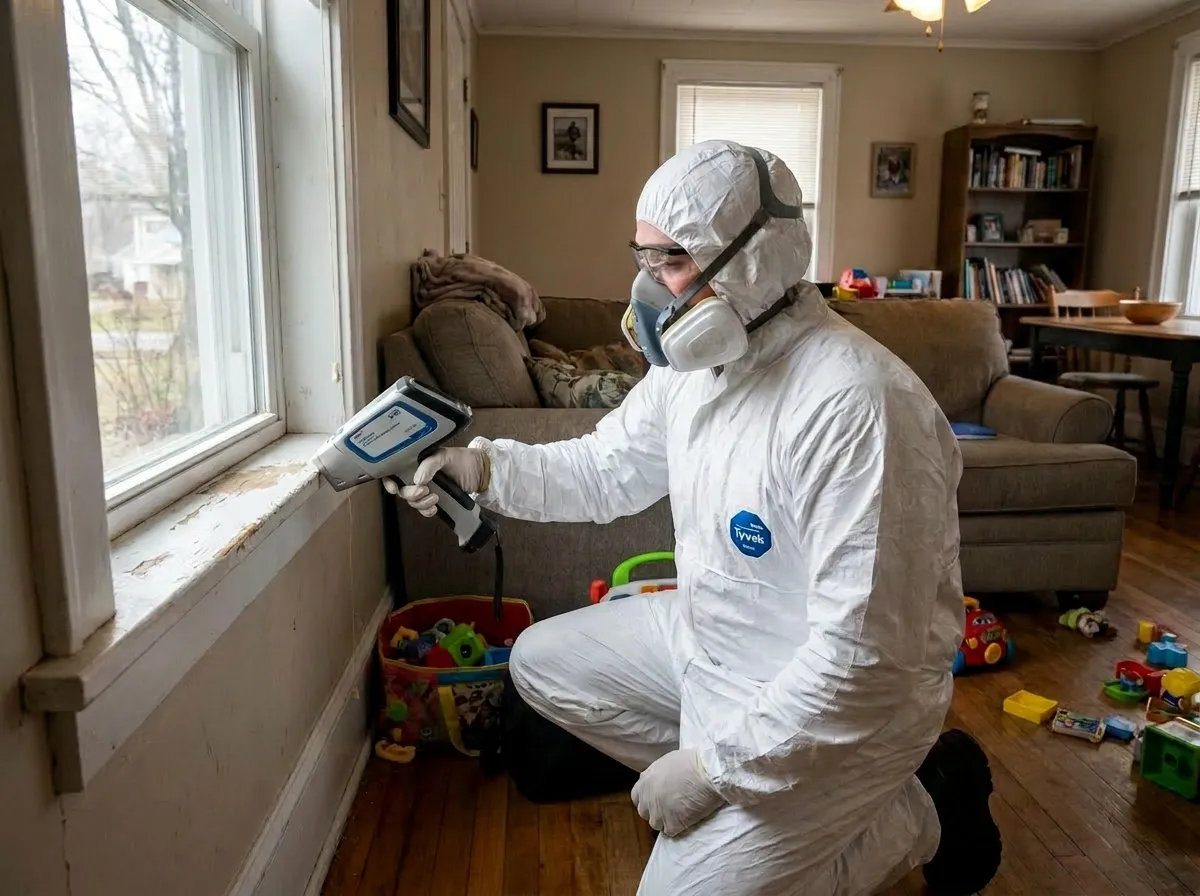
Environmental testing is the step in a restoration project that protects everything downstream. When it is done, the crew knows what they are working with, the homeowner knows what is in the home, and the insurance file has the documentation it needs to support the scope. When it is skipped, all three are at risk, and the cost of finding out the hard way is always higher than the cost of testing first.
This guide walks through when environmental testing matters in a restoration context, what the testing actually looks like, and why in-house lab capability changes the project timeline.
When Testing Matters
Environmental testing is not required on every restoration job, but it is required more often than most homeowners and some contractors realize. The common triggers are:
Any demolition in a pre-1985 home. Homes built before 1985 have a meaningful chance of containing asbestos in popcorn ceilings, vinyl floor tile and mastic, pipe insulation, duct wrap, and some drywall joint compounds. When a water loss, fire loss, or mold remediation requires removing any of those materials, testing determines whether standard removal or asbestos abatement protocols apply. Removing asbestos-containing material without testing is both a regulatory violation and a health risk.
Visible or suspected mold. When mold is visible or when a water loss has been wet long enough for colonization to start, testing provides a documented baseline of what species are present and at what levels. That baseline drives the remediation scope and provides a comparison point for post-remediation verification.
Sewage and Category 3 water losses. Testing for bacterial contamination after a sewage backup or flood event confirms the cleanup reached safe levels. Without testing, the only verification is visual, which misses contamination that remains on surfaces after cleaning.
Lead paint in pre-1978 homes. Any demolition or disturbance of painted surfaces in homes built before 1978 can release lead dust. Testing identifies which surfaces contain lead so the crew can follow the correct removal protocols.
Post-fire chemical concerns. Modern building materials and furnishings release complex chemical compounds when they burn. Testing after a fire can identify specific contaminants in soot and residue that affect the cleaning protocol.
Real estate transactions. Environmental testing is increasingly part of the due diligence file for buyers, especially on older homes. A clean report supports the sale. A positive result gives the buyer information they need to negotiate or plan remediation.
What the Testing Process Looks Like
Environmental testing follows a consistent sequence regardless of the contaminant.
- Site assessment. An inspector walks the property and identifies suspect materials or conditions based on the home’s age, construction type, and the nature of the loss. The inspector decides which materials to sample and where.
- Sample collection. Physical samples are taken for lab analysis. Asbestos samples are small pieces of the suspect material. Mold samples are air cassettes or surface swabs. Lead samples are paint chips or XRF readings. The sample collection is done with containment procedures to prevent cross-contamination.
- Laboratory analysis. Samples go to a certified environmental lab for analysis. The specific test depends on the contaminant. Asbestos uses polarized light microscopy. Mold air samples use spore trap analysis. Lead uses atomic absorption spectroscopy or XRF.
- Written report. The homeowner receives a written report with each sample, its location, the result, and recommendations. The report is what drives the next step, whether that is standard restoration, abatement, or leaving material in place.
- Scope adjustment. If any results are positive, the restoration scope adjusts to include the correct protocol. An asbestos positive triggers abatement. A mold positive triggers S520 remediation. A lead positive triggers lead-safe work practices. This adjustment is documented in the insurance file.
Why In-House Lab Capability Changes the Timeline
The single biggest bottleneck in environmental testing is lab turnaround time. Standard commercial labs take three to seven business days for most residential samples. That timeline creates a cascade of delays.
A homeowner with a water loss on Monday has samples pulled on Tuesday. Results come back the following Monday at the earliest. The remediation scope cannot be finalized until the results are in. Containment cannot go up. Demolition cannot start. The homeowner either waits at home with wet materials growing mold, or pays for a hotel while nothing visible happens.
Bingham Restoration operates an in-house environmental lab that processes most sample types in hours rather than days. The same homeowner has samples pulled and results returned on the same day. The scope is finalized that afternoon. Containment goes up the next morning. The project starts a full week earlier than it would with an external lab.
Over the full project, that week of compressed timeline means:
- Less secondary damage. Every day wet materials sit, the scope expands. Mold growth starts in the 24 to 48 hour window. A week of lab delay is a week of mold growth.
- Shorter hotel stays. When the home is uninhabitable, every extra day is additional living expense that hits the insurance cap.
- Faster claim resolution. Adjusters cannot approve a final scope until the environmental results are in. Faster results mean faster approval, faster reconstruction, and faster close.
- Lower total project cost. The cost of testing plus the cost of faster remediation is almost always less than the cost of testing plus a week of secondary damage plus the expanded scope that results from the delay.
What Homeowners Should Know
A few things to understand about environmental testing in a restoration context.
Testing is not always expensive. A standard three to five sample asbestos inspection on a residential home is a fraction of the cost of the demolition work it informs. Mold air sampling is similarly modest. The cost of testing is almost always dwarfed by the cost of not testing and finding out later.
You can request testing. Even if your contractor does not suggest it, you can request environmental testing before demolition begins. If the contractor resists testing on a pre-1985 home, that is a signal to find a different contractor.
Testing protects the claim. An adjuster who sees environmental testing in the file knows the scope was built on data rather than guesses. That makes the scope harder to question and easier to approve. Skipping testing to save a few hundred dollars can cost thousands in a disputed claim.
Negative results are still valuable. A negative asbestos result means the demo can proceed at standard pace without abatement protocols. A negative mold result means the drying plan is working and no additional remediation is needed. Negative results move the project forward faster and cheaper than positive results, but they only exist if you test.
What Bingham Does
Our environmental testing and lab operations serve every metro where we run restoration, including Phoenix, Salt Lake City, Las Vegas, Los Angeles, Seattle, Dallas, Kansas City, Tucson, Nashville, and the surrounding communities in each region. Every sample goes through our in-house environmental lab, which returns results in hours for most sample types.
We integrate testing into the restoration workflow so it does not add delay to the project. When testing is part of a covered loss, we bill insurance directly and document the results for the claim file. When testing is standalone, whether for a renovation, a real estate transaction, or a concern about conditions in the home, we provide a written report with results and recommendations.
Our crews arrive in 48 minutes on average across the service area. If you have a restoration project coming up and want to know whether environmental testing should be part of the scope, call 520-FLOODED and we will walk you through it.
Frequently Asked Questions
When is environmental testing required before restoration?
Testing is required any time a restoration project will disturb materials in a pre-1985 home that could contain asbestos, or in any home where lead paint is suspected. It is also required when mold is visible or suspected and the scope needs a documented baseline. Beyond the regulatory requirements, testing before demolition protects the crew, the homeowner, and the insurance claim.
What does environmental testing actually test for?
The most common tests in residential restoration are asbestos (polarized light microscopy on building materials), mold (air sampling and surface sampling), and lead paint (XRF testing or lab analysis of paint chips). Some projects also test for bacteria in sewage losses or volatile organic compounds after chemical spills. The specific tests depend on the home, its age, and the type of loss.
How long do environmental test results take?
Standard commercial labs typically take three to seven business days. Bingham Restoration operates an in-house environmental lab, which returns results in hours for most sample types. Faster results mean containment decisions and remediation start the same day instead of the next week, which shortens the overall project timeline.
Need Emergency Restoration Right Now?
Our crews arrive in 48 minutes on average and bill your insurance directly.
Call 520-FLOODED