
Bingham Restoration Resources
Dallas Fire Damage: Structural Safety & Restoration
Published May 8, 2026
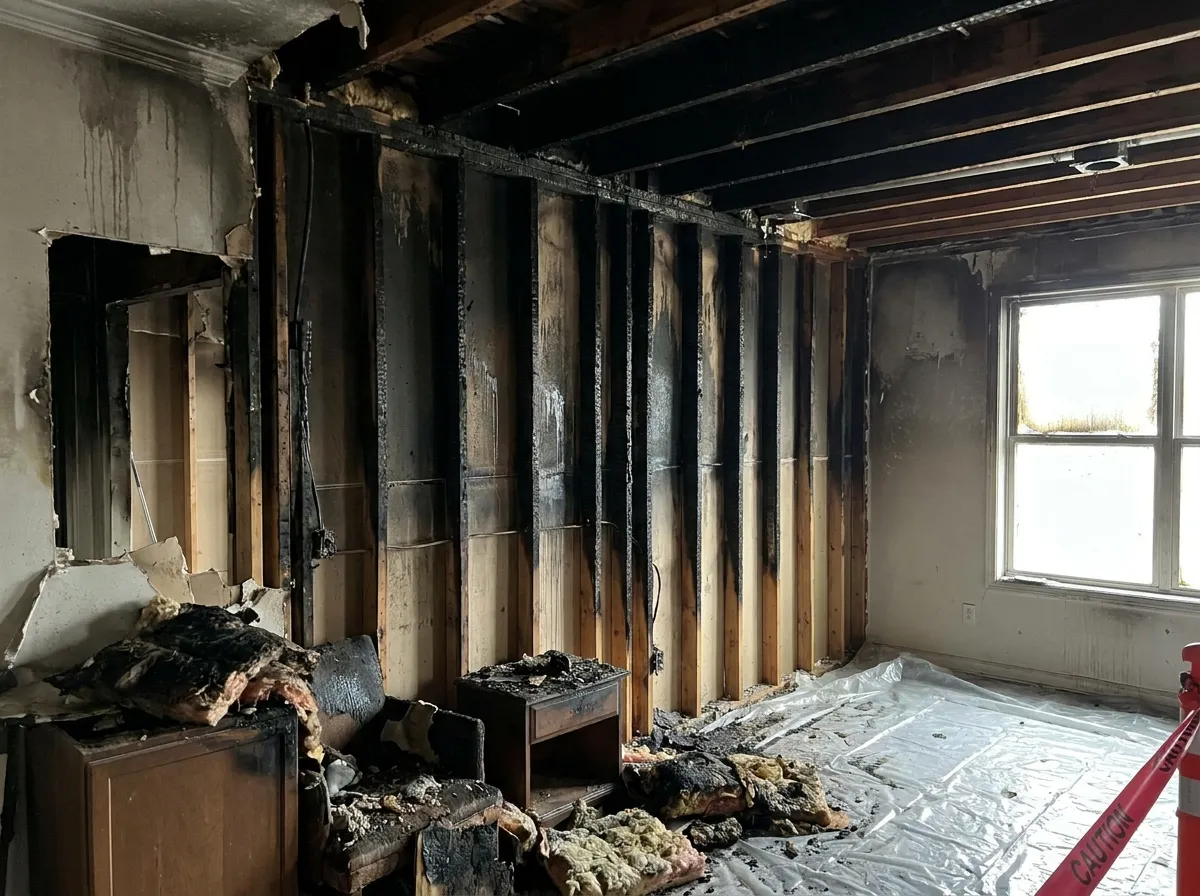
A house fire is one of the most disorienting events a homeowner can experience, and Dallas homes have a few factors that complicate the recovery. Texas summer heat accelerates smoke damage in the days after a fire. Older homes in East Dallas, Oak Cliff, and parts of Plano and Irving use building materials that behave differently in a fire than newer construction. And the suppression water from the fire department always creates a second, overlapping water damage loss that has to be addressed at the same time.
This guide walks through what Dallas homeowners should expect from a proper fire damage restoration and why the structural safety assessment matters more than most people realize.
Structural Safety Comes First
Before any cleaning, pack-out, or drying begins, a fire-damaged home needs a structural safety assessment. The fire department clears the scene for immediate life safety, but their clearance is not a statement that the home is safe to occupy or safe to work in. Restoration crews and, in more serious cases, a structural engineer evaluate the building before the project scope is written.
The things that get looked at include:
- Framing integrity. Fire weakens wood framing, and the weakness is not always visible from a charred surface. Load-bearing walls, floor joists, and roof trusses are inspected before any weight is put on them.
- Steel connectors and hardware. Modern framing uses joist hangers, hurricane ties, and other steel connectors that can lose strength when exposed to high heat. Replacement is often required even when the surrounding wood looks intact.
- Ceiling stability. Ceilings saturated with suppression water are much heavier than they look, and a partially burned ceiling can come down without warning. Any ceiling that is sagging, stained, or soft is treated as a collapse risk.
- Floor integrity. Subfloor that has been wet and heated can delaminate. Walking on it before assessment is a hazard.
- Electrical safety. Even with power shut off at the main, hidden damage to wiring inside walls can create a hazard when power is restored. An electrical inspection is part of most serious fire projects.
A real restoration company will not begin interior work until this assessment is complete and documented.
The Order of Operations
Here is what a proper Dallas fire restoration looks like from the first day through reconstruction.
- Safety assessment and structural clearance. Crew arrives in PPE, evaluates the building, and coordinates with a structural engineer if needed.
- Emergency board-up. Broken windows, burned-out openings, and compromised exterior sections are boarded up to secure the property against weather and theft.
- Water extraction and drying. Suppression water is extracted and air movers and dehumidifiers are deployed to dry the structure. This runs in parallel with the fire cleanup, not after it.
- Content inventory and pack-out. Salvageable belongings are inventoried, photographed, and packed out to a cleaning facility. Items that cannot be restored are documented for the insurance claim.
- Soot and debris removal. Burned materials, ash, and debris are removed from the structure. Hard surfaces are cleaned with the correct method for the residue type.
- HEPA air scrubbing. Air scrubbers run throughout the project to pull airborne soot and smoke residue out of the home.
- Deep cleaning of unaffected areas. Smoke travels. Rooms the fire never reached still need cleaning to remove odor and prevent long-term corrosion of finishes and metals.
- Odor removal. Thermal fogging, hydroxyl generators, or ozone treatment runs after cleaning to neutralize residual odor at the molecular level. Skipping this step is why bad fire jobs still smell like smoke six months later.
- Sealing and encapsulation. Framing, subfloor, and other structural elements exposed to smoke are sealed before reconstruction.
- Reconstruction. Drywall, flooring, cabinetry, paint, and finishes are replaced to return the home to pre-loss condition.
Dallas-Specific Factors
A few North Texas conditions shape the scope of a typical fire job.
Summer heat accelerates smoke damage. High interior temperatures push smoke residue deeper into porous materials faster than in cooler climates. A fire in August where the home sits without climate control for two days is a different scope than a fire in February.
Older housing stock in the urban core. Homes in East Dallas, Oak Cliff, Pleasant Grove, and parts of Fort Worth have more wood framing and lath-and-plaster construction than newer subdivisions in Frisco, Allen, and McKinney. The older construction behaves differently in a fire and often has more structural damage at the same fire severity.
Humidity affects drying timelines. North Texas humidity is not Seattle-level, but it is significantly higher than the desert Southwest. Suppression water drying takes longer than it does in a dry climate, which means dehumidification has to be sized correctly.
Storm-driven electrical fires. Dallas thunderstorms produce lightning strikes and power surges that start electrical fires. These are a predictable part of the local fire mix and tend to concentrate during severe weather seasons.
What to Do Right Now
If you are returning to a home after a fire, do these four things before anyone else touches it.
- Do not enter until the fire department clears the structure. Hot spots and structural damage are not always visible.
- Do not start cleaning. Soot on the wrong surface cleaned the wrong way gets pushed deeper into the material.
- Document everything with photos and video before any work begins.
- Call a certified restoration company. A real 24/7 operation answers live and dispatches immediately.
What Bingham Does in Dallas
Our fire damage response crews serve Dallas, Fort Worth, Arlington, Plano, Frisco, McKinney, Irving, Garland, Grand Prairie, Denton, Richardson, Allen, Southlake, Mansfield, Mesquite, Carrollton, Lewisville, Weatherford, Waxahachie, Cleburne, Sherman, Corsicana, Waco, and Tyler.
Our crew leads hold IICRC FSRT (Fire and Smoke Restoration Technician) and OCT (Odor Control Technician) credentials, and we follow the full restoration order of operations on every job, including the odor removal and sealing steps that lesser crews skip. We bill insurance directly, document every stage of the project, and coordinate with your adjuster from the first call forward.
Our crews arrive in 48 minutes on average across the metroplex. If you are looking at a fire loss right now, do not wait. Call 520-FLOODED and a Bingham crew will be on the way.
Frequently Asked Questions
Is my Dallas home structurally safe after a fire?
That is not a question a homeowner should answer by eye. Fire weakens wood framing, compromises steel connectors, and can leave ceilings and floors that look intact but are no longer load bearing. A proper restoration starts with a structural safety assessment by a qualified crew, and in more serious cases a structural engineer is brought in before any interior work begins. Do not enter a fire-damaged home until it has been cleared.
How long does fire restoration take in Dallas?
Timeline depends on the severity. A small contained kitchen fire with smoke damage throughout the home is typically a two to four week project. A fire that compromises framing and requires partial reconstruction can run two to four months or longer. A real restoration company gives you a documented timeline in the first 48 hours based on the actual scope, not a guess.
Does Texas homeowners insurance cover fire damage?
Fire is one of the most broadly covered perils under a standard Texas homeowners policy, including the resulting smoke damage and water damage from suppression. Specific coverage depends on your policy and the cause of the fire. Final coverage is a decision between you and your carrier, and Bingham Restoration documents the loss thoroughly for your claim file.
Need Emergency Restoration Right Now?
Our crews arrive in 48 minutes on average and bill your insurance directly.
Call 520-FLOODED