
Bingham Restoration Resources
Las Vegas Fire Damage: Desert Heat, Stucco & Restoration
Published July 1, 2026
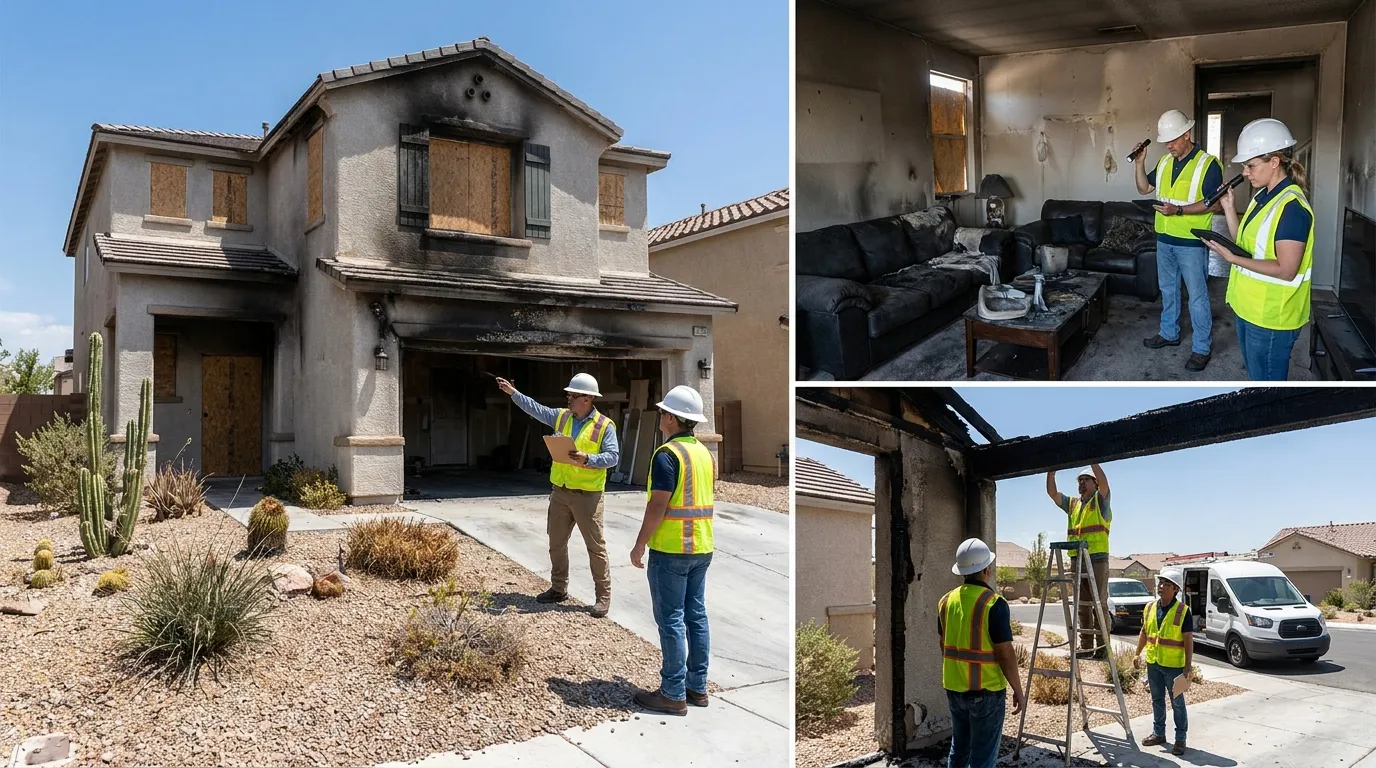
Fire damage restoration in Las Vegas operates against a different set of conditions than coastal or northern markets. The desert climate, stucco-dominant construction, and HVAC-dependent indoor environment each shape what restoration looks like. This guide walks through what Las Vegas homeowners should know.
What Makes Las Vegas Fire Damage Different
Stucco Exteriors
Most Las Vegas residential construction uses three-coat stucco over either wood frame or block. Stucco behaves differently than wood siding during a fire:
- It does not burn, which limits exterior spread.
- It can crack from thermal shock during firefighting water application.
- It hides smoke residue in surface texture and requires specialty cleaning.
- Repairs require texture matching, which is its own trade specialty.
A fire damage scope that treats stucco like wood siding misses both the repair complexity and the cost.
Tile and Concrete Slab Construction
Las Vegas homes are typically slab-on-grade with significant tile flooring. This affects fire restoration:
- Tile and slab survive most residential fires.
- Grout absorbs soot and odor and usually requires deep cleaning.
- Hardwood floors (where present) handle heat differently than tile and often need refinishing or replacement.
- Carpet over slab typically replaces.
HVAC Centrality
Las Vegas homes run HVAC for cooling 8 to 9 months per year. The system is the single largest distributor of smoke contamination in a fire-affected home. Ducts, air handlers, and return plenums all hold soot after a fire. Cleaning the HVAC is non-negotiable on any Las Vegas fire scope.
Desert Wind
Open windows and damaged envelopes catch desert wind quickly. Emergency board-up has to be wind-rated, not just weather-rated. Dust intrusion through compromised openings can contaminate clean zones if board-up is incomplete.
Common Fire Sources in Las Vegas
- Kitchen grease fires — the largest single category, year-round.
- HVAC and electrical — driven by sustained high cooling loads.
- Garage fires — vehicle-related, lithium battery, or stored chemical.
- Outdoor sources — grill, fire pit, or wildfire embers reaching the home.
- Dryer fires — lint buildup combined with high ambient heat.
The Las Vegas Restoration Sequence
- Emergency response and board-up within the first hour to secure against wind and weather.
- Smoke odor containment to prevent migration to unaffected areas through the HVAC.
- HVAC isolation and shutdown until system is cleaned.
- Soot and residue removal from hard surfaces.
- Content pack-out and specialty cleaning.
- Drywall and insulation removal in heavily affected zones.
- Stucco repair and texture matching on exterior damage.
- HVAC deep clean including coil and duct system.
- Deodorization with thermal fogging or hydroxyl treatment.
- Rebuild — drywall, flooring, paint, trim.
- Final clearance and walkthrough.
For more on what is involved in smoke cleaning specifically, see smoke damage cleaning beyond visible soot.
What to Do in the First Hour
- Do not re-enter the home until the fire department clears it.
- Do not run the HVAC.
- Do not test electronics that were exposed to smoke.
- Photograph everything visible before any cleanup begins.
- Call your insurance carrier and your restoration team in that order.
Nevada-Specific Insurance Notes
- Wildfire coverage is included in most Nevada homeowners policies but may have separate deductibles in high-risk areas.
- Smoke damage from nearby fires (even when your home did not burn) is covered under most policies as a separate loss type.
- Additional living expense (ALE) coverage provides hotel and meal coverage during displacement. Document expenses from day one.
Related Services
Bingham Restoration provides 24/7 fire damage restoration across Las Vegas and surrounding areas. Call 520-FLOODED for an active loss or to schedule pre-event consultation.
Frequently Asked Questions
How fast can a Las Vegas fire damage crew respond?
Bingham Restoration averages under 60 minutes from dispatch to on-site arrival across the Las Vegas Valley, 24/7. Emergency board-up and smoke odor containment begin on arrival to prevent secondary damage from desert wind and dust.
Does Las Vegas heat make fire damage worse?
Yes, in specific ways. High ambient temperatures accelerate VOC off-gassing from smoke residue, meaning smell intensifies before remediation. Stucco exteriors can also crack from thermal shock during firefighting. Both shape the restoration scope.
Will my Nevada homeowners insurance cover the fire?
Standard Nevada homeowners policies cover fire damage from accidental sources, including electrical, kitchen, HVAC, and wildfire-caused fires. Arson and intentional acts are excluded. Vehicle-related fires (garage) are typically covered.
Need Emergency Restoration Right Now?
Our crews arrive in 48 minutes on average and bill your insurance directly.
Call 520-FLOODED