
Bingham Restoration Resources
Fire Damage Restoration in Phoenix: What to Expect
Published May 2, 2026
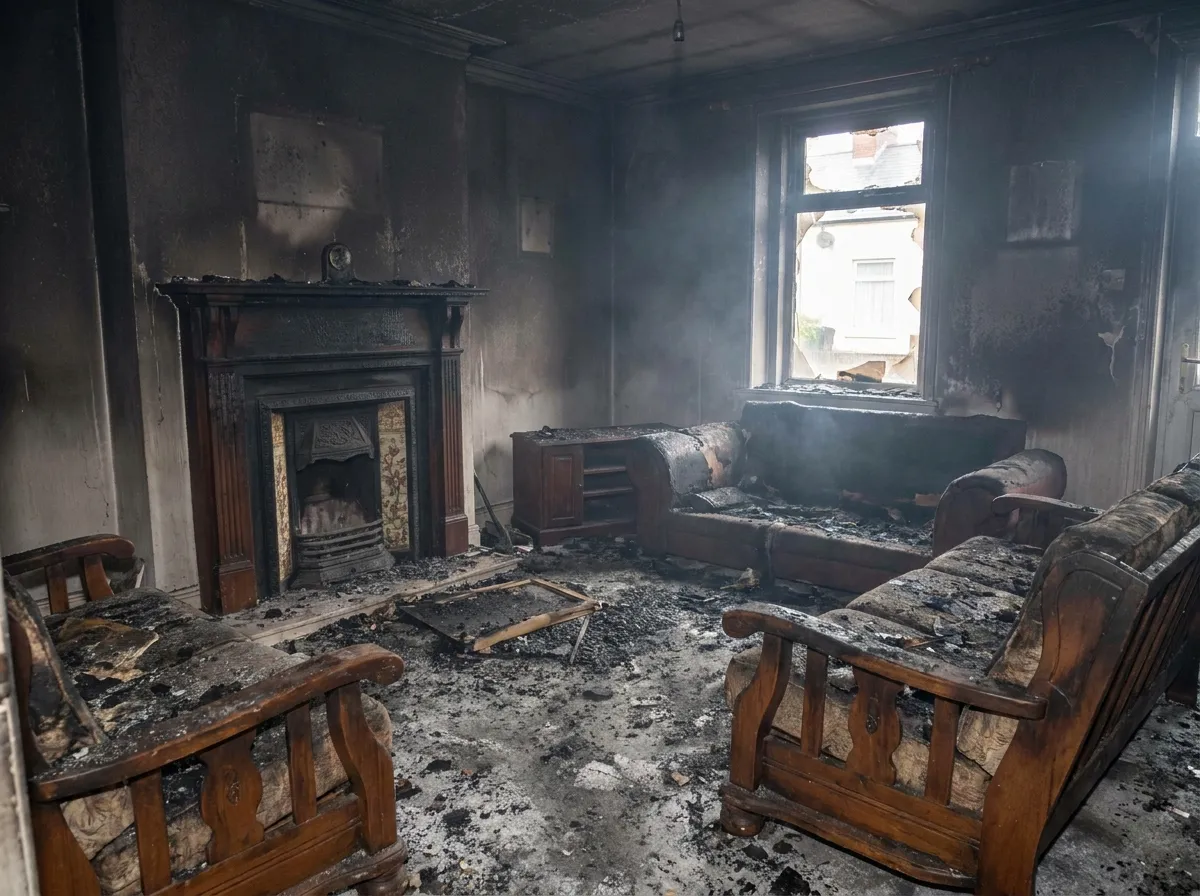
Fire damage is one of the most disorienting events a homeowner can experience. By the time the fire department clears the scene, the house looks unrecognizable. Walls are black, the air smells like a chemistry experiment, everything is wet from suppression water, and the homeowner has no clear sense of where to start. The good news is that the restoration process is well-defined, the order of operations is consistent from one job to the next, and most of the visible damage is repairable if the response begins quickly.
This guide walks through what Phoenix homeowners can expect from a proper fire damage restoration, what the Valley-specific factors are, and what a real crew does on the first day.
What Actually Happens in a Structure Fire
A structure fire damages a home in four separate ways, all of which have to be addressed for the restoration to hold.
- Direct fire damage. Charring, burning, and structural compromise in the immediate area of the fire.
- Smoke damage. Fine particulate and chemical residue that travels through the entire home, including into spaces the fire never reached. Smoke residue is acidic and will etch finishes, corrode metal, and bond to porous materials over days to weeks if not addressed.
- Soot deposits. Airborne particles that settle on every surface in the home. Soot on the wrong surface cleaned in the wrong order will smear and push the problem deeper into the material.
- Water damage from suppression. Fire departments extinguish structure fires with large volumes of water. By the time the scene is cleared, the home has a full water loss on top of the fire loss. Mold growth can start in 24 to 48 hours.
A proper restoration addresses all four in the correct order. Doing them out of order wastes time and money because earlier steps undo later steps.
The Order of Operations
Here is what a real Phoenix fire restoration looks like from the first day through reconstruction.
- Safety assessment. Crew arrives in PPE, evaluates structural integrity, checks for remaining hot spots, and confirms utilities are safely shut off where needed.
- Emergency board-up. Broken windows, burned-out openings, and compromised exterior sections are boarded up to secure the property against weather and theft.
- Water extraction and drying. Suppression water is extracted and air movers and dehumidifiers are deployed to dry the structure. This runs in parallel with the fire cleanup rather than after it.
- Content inventory and pack-out. Salvageable belongings are inventoried, photographed, and packed out to a cleaning facility. Items that cannot be restored are documented for the insurance claim.
- Soot and debris removal. Burned materials, ash, and debris are removed from the structure. Hard surfaces are cleaned with the correct method for the residue type, which varies by what burned.
- HEPA air scrubbing. Air scrubbers run throughout the project to pull airborne soot and smoke residue out of the home.
- Deep cleaning of unaffected areas. Smoke travels. Rooms the fire never reached still need cleaning to remove odor and prevent long-term corrosion of finishes and metals.
- Odor removal. Thermal fogging, hydroxyl generators, ozone treatment, or a combination runs after cleaning to neutralize residual odor at the molecular level. This is the step most often skipped, and it is why bad fire restoration jobs smell like smoke six months later.
- Sealing and encapsulation. Framing, subfloor, and other structural elements exposed to smoke are sealed before reconstruction to lock in any residual odor.
- Reconstruction. Drywall, flooring, cabinetry, paint, and finishes are replaced to return the home to pre-loss condition.
Every stage is documented for the insurance file. Skipping documentation on a fire job is the fastest way to lose money on the claim.
Phoenix-Specific Factors
Fire restoration in the Valley has a few local conditions that shape the timeline.
Desert heat accelerates smoke damage. High interior temperatures push smoke residue deeper into porous materials faster than in cooler climates. A fire in August where the home sits without climate control for two days is a different scope than a fire in February where the home stays cool.
Dry air helps drying timelines. The flip side is that once the water extraction and dehumidification are running, the Valley’s low ambient humidity actually helps the structural drying phase move faster than it would in a wetter climate.
Older homes have more combustible materials. Central Phoenix, parts of Tempe and Mesa, and older Scottsdale neighborhoods built in the 1960s and 1970s use more wood framing and lath-and-plaster construction that behaves differently in a fire than newer stucco and drywall construction.
Wildfire smoke events. Some Valley homes receive smoke damage without an on-site fire, from wildfire smoke intrusion during bad fire seasons. The cleanup protocol overlaps with structure fire smoke cleanup and is often underestimated by homeowners and adjusters.
What to Do Right Now
If you are returning to a home after a fire, do these four things before anyone else touches it.
- Do not enter until the fire department clears the structure. Hot spots and structural damage are not always visible.
- Do not start cleaning. Soot on the wrong surface cleaned the wrong way gets pushed deeper into the material.
- Document everything with photos and video before any work begins. These images are the best evidence your adjuster will ever have.
- Call a certified restoration company. A real 24/7 operation answers live and dispatches immediately.
What Bingham Does in Phoenix
Our fire damage response crews serve Phoenix, Scottsdale, Mesa, Tempe, Chandler, Gilbert, Glendale, and Peoria. Our crew leads hold IICRC FSRT (Fire and Smoke Restoration Technician) and OCT (Odor Control Technician) credentials, and we follow the full restoration order of operations on every job, including the odor removal and sealing steps that lesser crews skip.
We bill insurance directly, document every stage of the project, and coordinate with your adjuster so you are not playing middleman. Our crews arrive in 48 minutes on average across the Valley.
If you are looking at a fire loss right now, do not wait. Call 520-FLOODED and a Bingham crew will be on the way.
Frequently Asked Questions
Can smoke odor really be removed, or does it always come back?
It can be removed completely when the restoration is done right. Surface cleaning alone will not do it because smoke residue penetrates porous materials and settles into HVAC systems. A proper Phoenix fire job combines deep cleaning, HEPA air scrubbing, thermal fogging or hydroxyl treatment, and sealing of framing where necessary. When those steps are skipped the odor comes back, which is why the protocol matters.
Why does fire damage need a water restoration response too?
Most structure fires are extinguished with hundreds to thousands of gallons of water from fire department hoses. By the time the fire is out, the home has both fire and water damage, and mold growth can start within 24 to 48 hours if the water is not addressed. A proper Phoenix fire restoration treats both losses as part of the same scope from the first hour on site.
Will my insurance cover fire damage restoration in Arizona?
Fire damage is one of the more broadly covered perils under a standard Arizona homeowners policy, including the resulting smoke damage and water damage from suppression. Specific coverage depends on your policy and the cause of the fire. Final coverage is a decision between you and your carrier, and Bingham Restoration documents the loss thoroughly for your claim file.
Need Emergency Restoration Right Now?
Our crews arrive in 48 minutes on average and bill your insurance directly.
Call 520-FLOODED