
Bingham Restoration Resources
Why IICRC Certification Matters for Restoration
Published April 24, 2026
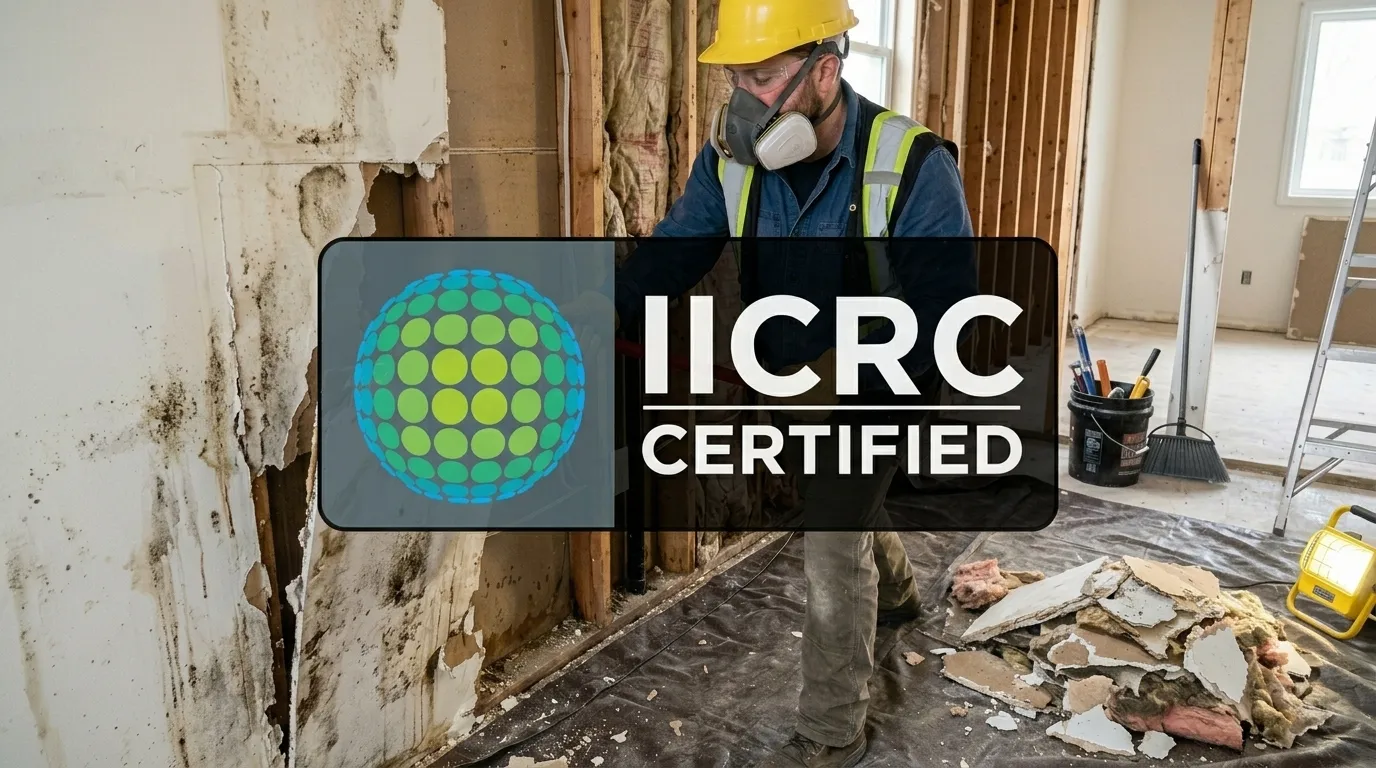
Restoration is one of the few industries where homeowners are asked to trust strangers with their most expensive asset, almost always during the worst moment of their year, with very little visible difference between a qualified crew and an unqualified one. IICRC certification is the credential that makes that difference visible. It is not the only thing that matters, but it is the first thing to ask about, and it is the one that separates a real restoration company from a cleanup operation with a better website.
This guide explains what IICRC certification actually means, why it affects the outcome of a job, and how to verify a company holds the credentials it claims.
What the IICRC Actually Is
The IICRC stands for the Institute of Inspection, Cleaning and Restoration Certification. It is a nonprofit body, independent of any single company, that develops and maintains the technical standards for the cleaning and restoration industry. Those standards are written by working technicians, reviewed by industry experts, and updated regularly.
The most important standards for homeowners are these three:
- S500. The standard for professional water damage restoration. It covers assessment, categorization of water, extraction, drying, monitoring, and documentation.
- S520. The standard for professional mold remediation. It covers containment, air pressure, removal protocols, and post-remediation verification.
- S540. The standard for professional trauma and crime scene cleanup. Less relevant for most water and fire jobs, but worth knowing the full scope.
When an adjuster reviews a claim and sees that the company followed the IICRC S500 on a water loss, it gives the file a baseline of credibility because the scope was built on the same methodology the carrier’s own experts use. When they do not see that, the file is harder to defend and the scope is more likely to be questioned.
Why It Matters for Your Home
Here is the practical reason IICRC certification matters, stripped of industry talk.
A certified technician has been trained and tested on how to dry a structure properly, how to identify hidden moisture, how to prevent mold growth during the drying process, how to set up negative air containment, and how to document every step in a way that makes the scope defensible. An uncertified technician may know some of this from experience, or may not know it at all. In the middle of a live water loss, there is no way for a homeowner to tell the difference until the work is done.
Six weeks later, the difference is very visible. Homes dried by a certified crew usually come back to baseline moisture cleanly, stay dry, and pass any future inspection. Homes dried without proper methodology often develop hidden mold behind walls, warping in flooring, and staining that was not there when the project started. Fixing the second set of problems is more expensive than doing the job right the first time.
The Specific Certifications to Look For
An IICRC-certified company is built on individually certified technicians. Here are the common credentials to recognize.
- WRT (Water Damage Restoration Technician). The entry-level certification for water loss work. Every technician on a water job should hold at least this credential.
- ASD (Applied Structural Drying). Advanced certification for technicians who run drying equipment and design drying plans. Anyone writing a scope for a multi-room water loss should hold this.
- AMRT (Applied Microbial Remediation Technician). The mold remediation credential. Required for anyone directing a mold project.
- FSRT (Fire and Smoke Restoration Technician). The fire and smoke credential. Required for fire restoration work.
- OCT (Odor Control Technician). Specialized training for deodorization after fire, smoke, or trauma events.
A well-run restoration company has multiple technicians holding the appropriate credentials for the work they do, not one certified owner and a crew of day laborers.
How to Verify a Company’s Credentials
The IICRC maintains a public verification portal at iicrc.org. You can search by company name, certification number, or technician name, and the portal will show you active certifications and their expiration dates. This takes less than a minute.
When you are vetting a restoration company, ask for their firm certification number and the credentials their crew leads hold. A legitimate company will give you that information without hesitation. If you get evasion or generalizations, assume the worst and keep looking.
What IICRC Certification Does Not Guarantee
IICRC certification is necessary, but it is not sufficient. It tells you the technicians have been trained on industry standards. It does not tell you whether the company is honest, well-insured, responsive, or easy to work with. You still need to check licensing, insurance, references, and reviews.
It also does not guarantee specific outcomes on an insurance claim. Coverage decisions are between you and your carrier. What certification does guarantee is that the scope of work submitted to your adjuster will be built on a methodology the adjuster recognizes. That alone makes claims go smoother and approvals more likely.
What Bingham Does
Our crews are IICRC-certified in water, fire, and mold restoration, and our crew leads carry the advanced credentials (ASD, AMRT, FSRT) that the more complex projects require. We follow S500 on every water job and S520 on every mold project, and we document our work against those standards so our scopes hold up under any adjuster review.
We also run our own in-house environmental lab for mold and asbestos testing, which shortens turnaround on samples from the several days most labs take to a matter of hours. That means containment goes up faster, remediation starts sooner, and the project closes cleaner.
Our crews arrive in 48 minutes on average across ten states. We bill your insurance directly, document every stage of the project, and coordinate with your adjuster so you are not playing middleman. If you want to verify any of our credentials before we show up, our firm number is available on request and searchable on iicrc.org.
If you are looking at a water, fire, or mold loss and trying to decide who to call, make IICRC the first question. Then call 520-FLOODED and we will be on the way.
Frequently Asked Questions
What is the IICRC?
The IICRC, or Institute of Inspection, Cleaning and Restoration Certification, is the nonprofit body that sets the cleaning and restoration industry's training standards. It is the credential insurance adjusters, attorneys, and professional restoration companies treat as the baseline for technical competence.
Is IICRC certification legally required to do restoration work?
No. Most states do not require a restoration company to be IICRC-certified to take a job. That is exactly why the credential matters. In an unregulated market, IICRC is the only consistent way to know a technician has been trained and tested on industry-standard methodology.
Can I verify a company's IICRC certification myself?
Yes. The IICRC maintains a public verification tool at iicrc.org where you can look up a company or technician by name or certification number. Any legitimate restoration company will give you that number when you ask.
Need Emergency Restoration Right Now?
Our crews arrive in 48 minutes on average and bill your insurance directly.
Call 520-FLOODED