
Bingham Restoration Resources
Mold Remediation in Phoenix: Yes, It Grows in the Desert
Published May 3, 2026
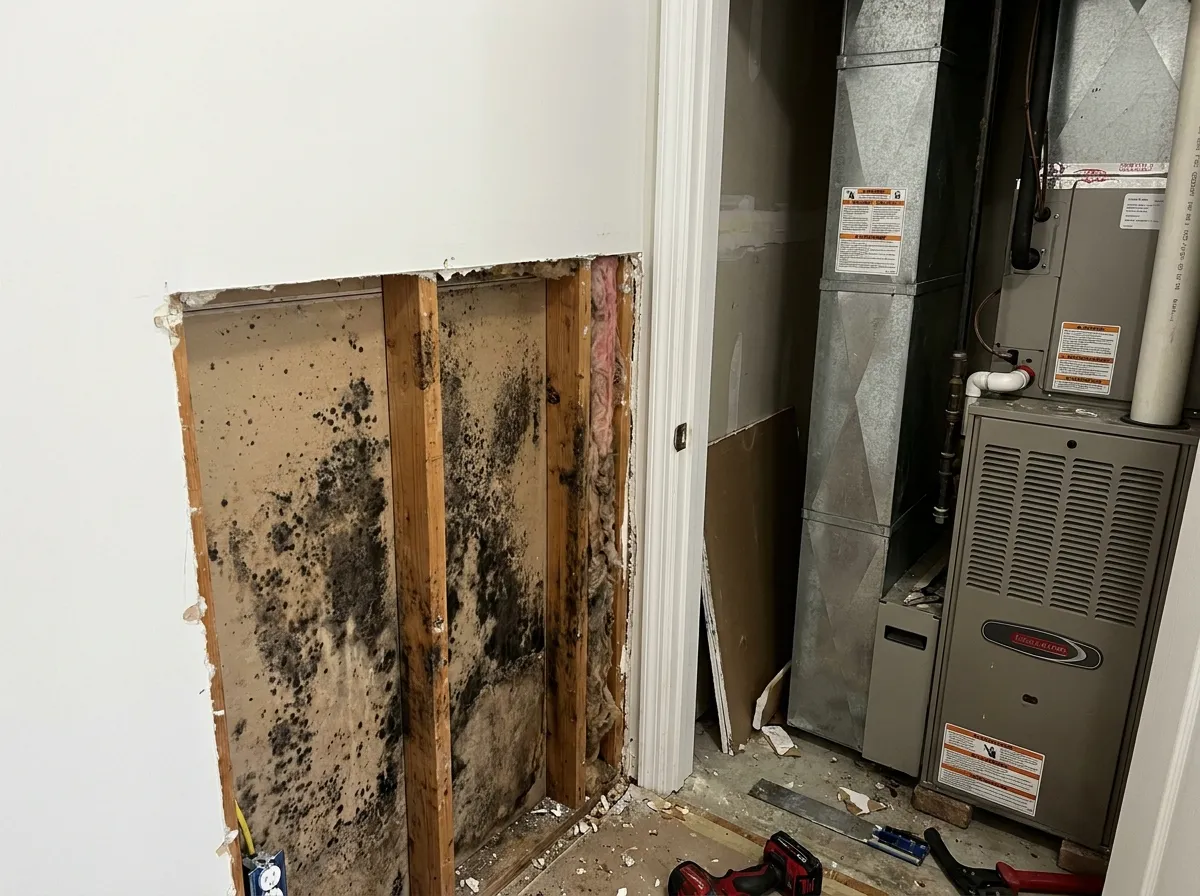
The most common thing Phoenix homeowners tell us about mold is that they did not think it could happen here. The climate is hot and dry, outdoor humidity runs low for most of the year, and the stereotype of moldy homes belongs to Seattle or New Orleans, not the Sonoran Desert. The problem with the stereotype is that mold does not care about the outdoor climate. It cares about moisture, nutrients, and temperature, and the inside of a Phoenix home with a slow leak or a failed HVAC drain line supplies all three.
This guide explains why mold grows in Valley homes, where it hides, and what a proper IICRC S520 remediation looks like.
Why Mold Grows in Phoenix Homes
The Phoenix mold problem comes from a handful of specific sources.
HVAC condensation failures. Desert cooling systems run hard during the summer, and when an HVAC condensate line backs up or a secondary drain pan fails, water drips into ceilings, soffits, and wall cavities for weeks before anyone notices. By the time the ceiling stain appears, there is already colonization in the cavity.
Slow plumbing leaks. Supply line pinhole leaks, worn shower pans, and drain line cracks put small amounts of water into wall cavities over long periods. The visible drywall looks fine while the back side of the same drywall is colonized.
Monsoon water intrusion. Phoenix monsoon storms produce intense rain and wind-driven water that finds every roof flashing weakness and window seal failure in the Valley. Post-monsoon mold jobs are a predictable part of our summer and fall schedule.
Post-water-loss mold. When a water loss is not dried properly on the first pass, the residual moisture in framing and behind baseboards becomes a mold job four to six weeks later. This is often preventable and is one of the main reasons we argue for IICRC S500 drying instead of shortcut drying.
Flat roof failures. Many central Phoenix homes have flat roofs with aging membrane or foam systems. A roof leak in a flat roof does not always produce an obvious stain because the water spreads laterally above the ceiling. By the time anyone looks, the insulation and ceiling joists are wet.
Where Mold Hides in Phoenix Homes
The visible mold on a bathroom ceiling or under a sink is usually not the worst of the problem. The harder jobs involve mold you cannot see from the living space.
- Behind drywall. The back side of drywall next to a leak is always the first place colonization starts. By the time you can see it from the front, the back side has been wet for a while.
- Under flooring. Subfloor, underlayment, and the bottom side of laminate or engineered wood often hold moisture that does not show from the surface.
- In HVAC ductwork and air handlers. The cool, wet surfaces inside an air handler and the insulation inside ducting are prime mold habitat when the system has a moisture problem.
- In attic insulation. A slow roof leak drops water into insulation that hides the problem until a home inspection catches it.
- Behind cabinetry and vanities. The back of a cabinet against an exterior wall or next to a leaking fixture is often colonized before the homeowner notices.
What a Proper S520 Remediation Looks Like
The IICRC S520 standard defines the protocol for professional mold remediation. A proper Phoenix mold job follows these steps.
- Assessment and source identification. We find the moisture source and confirm it has been or can be stopped. You cannot remediate mold while the leak is still active.
- Containment. Polyethylene barriers are built around the affected area to prevent cross-contamination. Negative air pressure is established using HEPA air scrubbers so air flows into the containment, not out.
- PPE and safety. Crew enters in tyvek suits, respirators, and eye protection. This protects both the crew and the rest of the home.
- Removal of contaminated materials. Porous materials that are colonized, including drywall, insulation, carpet, and carpet pad, are cut out and double-bagged for disposal. Semi-porous materials like framing are cleaned in place when possible.
- HEPA vacuuming and wet cleaning. Surfaces are HEPA vacuumed and then wiped with an EPA-registered antimicrobial.
- Structural drying. Once the contamination is removed, the structure is dried completely to prevent recurrence. Drying is not optional. Most recurrence problems come from stopping after the visible removal.
- Post-remediation verification. In more serious cases, air sampling or surface sampling confirms the remediation before the containment comes down and reconstruction begins.
- Documentation. Every stage is photographed and logged. The documentation supports your insurance claim and protects the work against future questions.
Our In-House Lab Advantage
Bingham Restoration operates an in-house environmental lab. For mold jobs, that changes the timeline in two specific ways.
First, initial testing to identify the species and confirm the scope comes back in hours instead of the three to seven days a third-party lab typically takes. That means containment can go up and remediation can start the same week instead of the next.
Second, post-remediation verification turnaround is fast enough that we can close projects and release containment without the homeowner having to live through an extra week of waiting. In a Valley summer, that is the difference between a one-week mold job and a two-week mold job.
What Bingham Does in Phoenix
Our mold remediation crews serve Phoenix, Scottsdale, Mesa, Tempe, Chandler, Gilbert, Glendale, and Peoria. Our crew leads hold IICRC AMRT (Applied Microbial Remediation Technician) credentials, and we follow the full S520 protocol on every job. We run our own environmental lab for testing and verification, which shortens every phase of the project.
We bill insurance directly when mold remediation is part of a covered water loss, and we document the scope thoroughly for your claim file. Our crews arrive in 48 minutes on average across the Valley.
If you suspect mold in your Valley home, or you are dealing with a visible colonization problem, call 520-FLOODED and a Bingham crew will be on the way.
Frequently Asked Questions
Can mold really grow in Phoenix homes when it is so dry outside?
Yes. Phoenix is dry outside, but the inside of a home with a water leak, a bad HVAC drain line, or a plumbing failure is the same moist environment mold needs anywhere else. We see mold jobs in Phoenix year-round, and the dry exterior climate can actually make the problem worse because homeowners do not expect it and leaks go unaddressed longer.
How long after a water leak does mold start growing?
The IICRC baseline is 24 to 48 hours. In Phoenix summers, warm interior temperatures can push growth toward the faster end of that window. If you have a leak that has been wet for more than two days, assume there is at least the start of a mold problem and have it tested before you close the wall back up.
Is testing required before remediation?
Not always, but often recommended. When the visible growth is contained and the source is clear, remediation can proceed without pre-testing. When the source is unclear, when there are multiple affected areas, or when an insurance claim or real estate transaction is involved, testing gives you a documented baseline. Bingham operates an in-house environmental lab, which returns results in hours instead of days.
Need Emergency Restoration Right Now?
Our crews arrive in 48 minutes on average and bill your insurance directly.
Call 520-FLOODED