
Bingham Restoration Resources
Mold Remediation in SLC: Utah Homeowners Guide
Published April 18, 2026
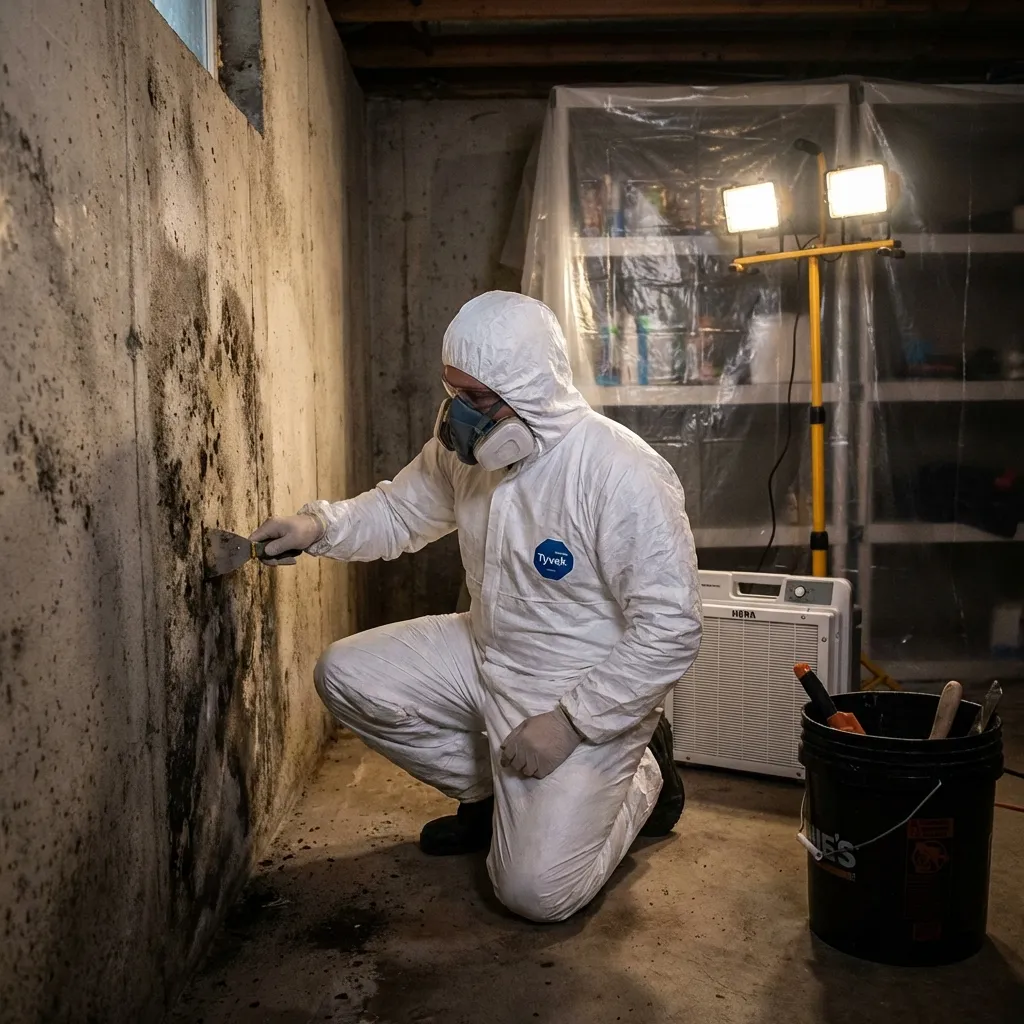
Mold is not something most Salt Lake City homeowners expect to deal with. The Wasatch Front is high and dry, summers are hot, and the air feels clean. That reputation is part of what makes our local mold problem easier to miss. The conditions that grow mold in a Utah home are different from the conditions in a coastal climate, and they happen inside walls during the part of the year when you are least likely to be looking for them.
This guide walks through why SLC homes develop mold, where it usually hides, and what real remediation looks like when you find it.
Why Mold Grows in a Dry Climate
Mold needs three things: moisture, a food source, and a temperature roughly between 60 and 80 degrees. Utah delivers all three, just not in the obvious ways.
Winter condensation is the biggest driver we see. Warm interior air moves through walls and meets cold sheathing behind the exterior siding. When that air cools below its dew point, the moisture condenses onto the back of the drywall, the insulation, and the framing. It is not a leak. Nothing is dripping. But the wall cavity is staying wet enough, long enough, for mold to colonize. Older homes with original insulation and newer homes with air-sealing gaps are both vulnerable.
Snowmelt intrusion is the second. March and April push melting snow into basements, crawlspaces, and the bottom of exterior walls. Homes on slopes along the benches and in neighborhoods like Cottonwood Heights, Draper, and Park City see this most often. The water finds its way through foundation cracks, window wells, and sill plates, and it sits long enough to cause problems.
Humidifiers and tight homes are the third. Modern construction is much tighter than the 1970s ranch most SLC families grew up in. Add a whole-house humidifier set too high and you create indoor humidity levels that build up inside wall assemblies. The result is the same as condensation, just from the opposite direction.
Where It Usually Hides
When we run mold inspections across the Salt Lake Valley, the same locations come up again and again.
- North-facing exterior walls. These stay cold longest in winter and accumulate the most condensation behind the drywall.
- Basement rim joists. The junction between the foundation and the wood framing is a classic cold spot where warm air meets cold concrete.
- Crawlspaces. Vapor barriers that have torn, come loose, or were never installed let ground moisture push upward into the subfloor.
- Window wells and below-grade windows. Standard failure points for snowmelt and spring runoff.
- Behind vinyl wallpaper. Nonporous wallcoverings trap any moisture that comes through the drywall and create ideal growth conditions.
- HVAC supply boots. Condensation on ductwork runs down into the boot and soaks the subfloor around it.
If any of these sound familiar, a professional inspection can tell you whether the issue is active or historical before you start pulling drywall.
What Real Mold Remediation Looks Like
There is a difference between cleaning visible mold and actually remediating it. Cleaning removes what you can see. Remediation stops the growth, removes colonized material, and verifies the space is safe before it is closed back up. Here is what a professional scope looks like from start to finish.
- Assessment and testing. A technician maps the affected area with moisture meters and a thermal camera, then takes samples if species identification is needed. Our in-house environmental lab handles the testing, which shortens turnaround from days to hours.
- Containment. Six-mil poly sheeting, zippered entries, and negative air pressure keep spores from spreading into clean parts of the home during removal.
- HEPA air filtration. Air scrubbers run continuously inside the containment to capture airborne spores.
- Removal of colonized materials. Drywall, insulation, carpet pad, and any other porous material with active growth is cut out and double-bagged for disposal.
- Structural cleaning. Remaining framing and hard surfaces are HEPA-vacuumed, damp-wiped with an EPA-registered cleaner, and inspected.
- Drying and moisture control. The underlying cause is addressed before any reconstruction starts. Leaking, condensing, or flooding has to stop or the problem comes back.
- Post-remediation verification. Clearance testing confirms the space is back to a normal indoor environment before containment comes down.
This is the standard our crews follow on every SLC mold project, whether the scope is a single bathroom wall or an entire basement.
What to Do If You Suspect Mold
If you smell something musty, see staining, or have family members with unexplained respiratory symptoms indoors, the next step is an inspection, not a test kit from the hardware store. DIY air samples are unreliable and cannot locate hidden growth. A professional assessment will tell you what you are dealing with, where it is, and what the scope actually is.
What you do not want to do is disturb suspected mold on your own. Cutting into a wall with active growth releases millions of spores into the air and spreads contamination to clean rooms. Stay out until the area is contained.
What Bingham Does Along the Wasatch Front
Our crews serve Salt Lake City, Murray, Sandy, Draper, West Jordan, South Jordan, Cottonwood Heights, Park City, Provo, Orem, Lehi, Ogden, Layton, and the surrounding Wasatch Front communities. We run 24/7 dispatch and arrive in 48 minutes on average. Every mold project starts with a full inspection, moves through IICRC-standard containment and removal, and ends with verification testing so you know the work is done.
We bill your insurance directly and handle documentation from start to finish. If the original cause was a covered water event, we coordinate with your adjuster on the same claim.
If you think mold might be growing in your SLC home, the earlier we look, the smaller the project usually is. Call 520-FLOODED and we will get an inspection scheduled.
Frequently Asked Questions
Is mold actually common in Salt Lake City? It feels dry here.
Yes. The Wasatch Front feels dry in summer, but winter brings a different problem: warm indoor air meeting cold wall cavities creates condensation that feeds mold. Snowmelt intrusion in spring is the other major driver. Most SLC mold calls we get are from homes where the owners had no idea they had a moisture problem.
How do I know if I have mold in the walls?
The most common early signs are a musty or earthy smell, unexplained allergy flare-ups indoors, and staining on drywall or around windows. A certified inspection with moisture meters and a thermal camera can find hidden growth before you see it on the surface.
How long does professional mold remediation take?
A contained single-room remediation typically runs two to five days depending on the scope. Larger projects involving multiple rooms or HVAC contamination can run a week or more. Every job includes containment, removal, HEPA cleaning, and a post-remediation verification before we leave.
Need Emergency Restoration Right Now?
Our crews arrive in 48 minutes on average and bill your insurance directly.
Call 520-FLOODED