
Bingham Restoration Resources
Sewage Backup in Salt Lake City: What Homeowners Should Know
Published April 27, 2026
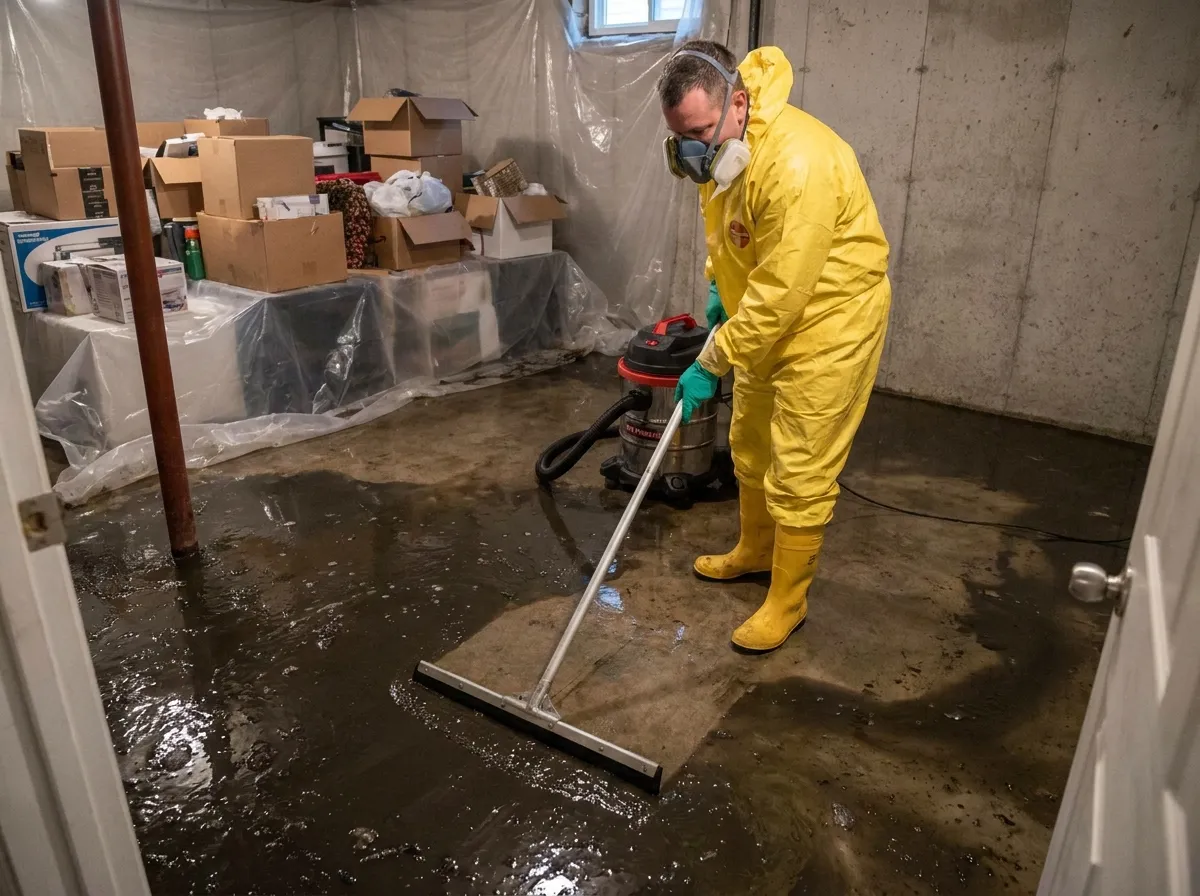
Sewage backups are one of the worst water losses a home can experience, and along the Wasatch Front they are more common than most homeowners expect. The combination of older clay sewer laterals, mature trees, basement-heavy housing stock, and spring runoff creates a set of conditions where a backup is less a freak event and more a predictable failure mode. This guide walks through why they happen here, what the real health risks are, and what a proper cleanup actually looks like.
Why Sewage Backups Happen Along the Wasatch Front
Salt Lake has a few specific conditions that push sewer laterals past their design life.
Older clay sewer lines in established neighborhoods. Homes in The Avenues, Sugar House, Rose Park, and older sections of Murray and Bountiful were built with vitrified clay pipe. Clay is durable but brittle, and after decades of ground movement and settling the joints separate and the pipe cracks. Once there is any opening, roots find it.
Aggressive root intrusion. Mature trees throughout the Avenues and Sugar House are beautiful until their roots find a sewer lateral. Roots enter through the smallest crack and slowly block the line from the inside until one load of laundry is enough to back the entire system up into the basement.
Basements are the lowest drain. Most Salt Lake homes have full or partial basements, which means the lowest fixture in the house is always a basement floor drain, laundry sink, or bathroom. When a mainline backs up, that lowest drain is where the wastewater comes out.
Spring runoff and combined flow events. During heavy snowmelt or intense spring storms, stormwater can enter the sanitary system through cleanouts or damaged connections and push the entire line past capacity. The extra volume backs up into whichever residential connection is lowest in the system.
City mainline blockages. Even with a perfect lateral from your house to the street, a grease or wipes blockage in the municipal mainline pushes wastewater back into the nearest residential connection. These are not your fault, but you still live with the cleanup.
What Makes Sewage a Category 3 Loss
Sewage is classified as Category 3 water under the IICRC S500 standard because of what it carries. The category dictates the cleanup protocol, and Category 3 is the most aggressive one in the industry standard.
- Bacteria. E. coli, Salmonella, Shigella, and Campylobacter are routinely found in raw sewage. Exposure causes gastrointestinal illness that lasts days to weeks.
- Viruses. Norovirus, rotavirus, and hepatitis A can survive in sewage and remain infectious on contaminated surfaces long after the visible water is gone.
- Parasites. Giardia and Cryptosporidium are common in wastewater and resistant to many household disinfectants.
- Mold growth. Category 3 water supplies moisture and nutrients mold needs. Growth begins inside the 24 to 48 hour window, sometimes faster because the contamination gives colonies a head start.
- Sewer gases. Hydrogen sulfide and methane accumulate in affected spaces and cause headaches, nausea, and respiratory irritation.
These are not theoretical risks. They are the reason professional crews enter a sewage loss in full PPE: tyvek suits, respirators, nitrile gloves, and eye protection. A homeowner with a mop and bleach is exposed to every one of these contaminants.
What a Proper Cleanup Looks Like
A real Category 3 cleanup follows a specific protocol from the IICRC S500 standard. The process looks the same from Park City to Provo.
- Site safety and containment. Crew arrives in full PPE and immediately contains the affected zone. HVAC is shut down if it serves the affected area to prevent spreading contamination through the ductwork.
- Extraction of standing sewage. Truck-mounted or portable extraction removes the bulk of the wastewater. All extracted material is disposed of per local regulations.
- Removal of porous materials. Drywall, insulation, carpet, carpet pad, baseboards, and any other porous material that touched the sewage is cut out and double-bagged for disposal. Porous materials cannot be reliably decontaminated and the industry standard is removal.
- Cleaning and disinfection. All remaining hard surfaces are cleaned with detergent, then disinfected with an EPA-registered hospital-grade antimicrobial.
- HEPA air scrubbing. Air scrubbers run through the project to remove airborne bacteria and reduce odor.
- Structural drying. Once the contamination is removed and surfaces decontaminated, structural drying begins with air movers and dehumidifiers sized to the space.
- Post-remediation verification. In more serious cases, ATP testing or microbial sampling confirms the cleanup before reconstruction begins.
Every stage is documented. That documentation is what supports your insurance claim and what protects everyone who lives in the home afterward.
What to Do Right Now
If sewage has just backed up in your home, do these four things while you wait for a crew to arrive.
- Keep everyone out of the affected area. Children, pets, and anyone with respiratory issues especially.
- Shut off the water supply to the affected fixtures so no additional wastewater is added to the problem.
- Turn off HVAC if it runs through the affected area.
- Call a certified restoration company. Do not attempt to clean it yourself.
Bingham Restoration crews arrive in 48 minutes on average across the Wasatch Front, in full PPE, with the equipment and protocols needed to handle a Category 3 loss safely.
What Bingham Does Along the Wasatch Front
Our sewage response crews serve Salt Lake City, Murray, Sandy, Draper, West Jordan, South Jordan, Bountiful, Layton, Ogden, Provo, Orem, Lehi, Park City, and the surrounding Wasatch Front communities. We follow the IICRC S500 Category 3 protocol on every sewage job, document the scope with photos and moisture mapping, and coordinate directly with your insurance adjuster if you have the relevant endorsement on your policy.
We bill insurance directly and handle the paperwork from the first call forward. If there is any question about whether your policy covers the loss, we still document everything so that if a claim is possible, the file has what it needs.
If you are looking at a sewage backup right now, do not wait. Call 520-FLOODED and a Bingham crew will be on the way.
Frequently Asked Questions
Why are sewage backups common in Salt Lake basements?
Basements are the lowest point in the house, and sewage always backs up at the lowest drain. In older Salt Lake neighborhoods like Sugar House, The Avenues, and parts of Rose Park, that is almost always a basement floor drain or laundry sink. Combined with aging clay lateral lines and tree roots, basement backups are one of the most common Category 3 losses we see along the Wasatch Front.
Is sewage backup dangerous enough to require professional cleanup?
Yes. Sewage is classified as Category 3 water under the IICRC S500 standard. It carries bacteria, viruses, and parasites including E. coli, Norovirus, and Giardia. Porous materials that have touched sewage almost always have to be removed rather than cleaned, and the cleanup requires PPE and EPA-registered antimicrobials that a household cleaner cannot match.
Does my Utah homeowners insurance cover sewage backup?
Standard homeowners policies usually exclude sewage backup by default. Coverage is typically available through a specific sewer and drain backup endorsement, which many Salt Lake homeowners do not realize they need until after an event. Final coverage is a decision between you and your carrier, and Bingham Restoration documents the loss thoroughly for your claim file.
Need Emergency Restoration Right Now?
Our crews arrive in 48 minutes on average and bill your insurance directly.
Call 520-FLOODED