
Bingham Restoration Resources
Smoke Odor Removal in Seattle Homes
Published May 17, 2026
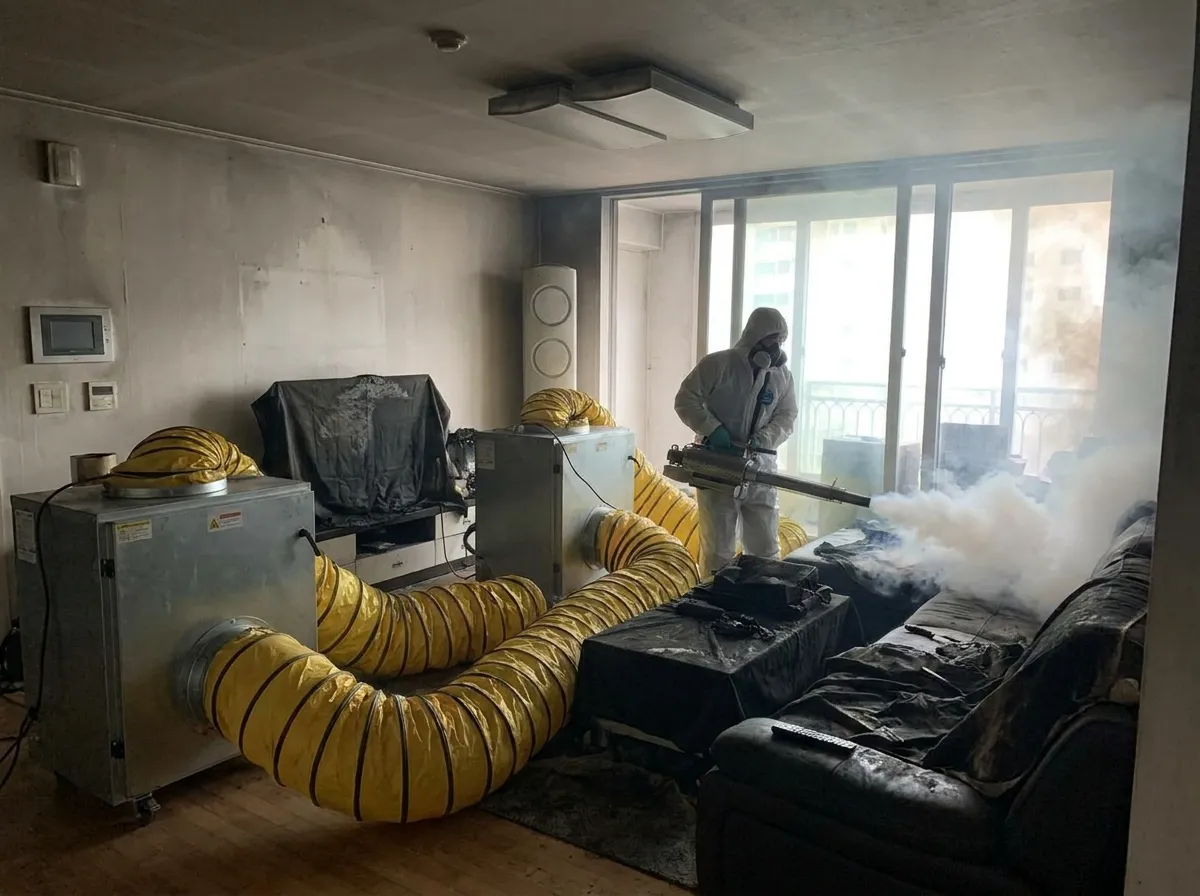
Smoke odor is the part of fire damage most homeowners underestimate. A small kitchen fire that is extinguished in minutes can leave odor that lasts for years if the cleanup stops at the visible soot. Conversely, a larger fire with proper deodorization can return to zero detectable odor when the project is complete. The difference is the protocol, and in Seattle the damp climate adds a specific complication that crews coming from drier regions sometimes miss.
This guide explains why smoke odor is hard to remove, what a proper multi-stage deodorization looks like, and how Seattle conditions shape the process.
Why Smoke Odor Is Hard to Remove
Smoke is not just soot on a wall. It is a combination of three things that all have to be addressed separately.
Surface residue. The visible soot on walls, ceilings, and surfaces. This is the part most cleanups handle, and it is also the part that is most straightforward to remove if the right cleaning method is used for the surface and the residue type.
Airborne particulate. Smoke leaves fine particles suspended in the air for days or weeks after the fire. These particles settle on every surface in the home over time, including in rooms the fire never reached.
Odor molecules embedded in porous materials. This is the part that causes smoke odor to come back weeks after a cleanup. Smoke molecules penetrate into upholstery, drapery, drywall paper, insulation, wood framing, and any porous material in the home. Surface cleaning does not touch them. They sit in the material and reactivate when humidity or temperature conditions change.
A proper deodorization has to address all three, in the right order, or the final result does not hold.
The Order of Operations
Here is what a full smoke odor removal looks like from start to finish.
- Source removal. Any material that cannot be deodorized is removed first. Charred drywall, burned insulation, smoke-damaged carpet, and porous materials in the immediate fire area come out. Trying to deodorize material that cannot be saved is wasted time.
- Surface cleaning. Hard surfaces are cleaned with the correct method for the residue type. Dry soot from a protein fire is different from wet soot from a plastic fire, and the cleaning method has to match. HEPA vacuuming is the first step on every surface to remove loose particulate before any wet cleaning begins.
- HVAC cleaning. Ductwork is cleaned to remove settled smoke residue. If the HVAC ran during or after the fire, smoke residue has coated the inside of every duct run in the system. Skipping this step means every time the HVAC cycles, smoke residue recirculates through the home.
- HEPA air scrubbing. Air scrubbers run throughout the project to pull airborne particulate out of the home. This runs continuously from the start of the project through the end.
- Thermal fogging or hydroxyl treatment. This is the deodorization step. Thermal fogging uses a heated solvent fog that penetrates the same porous materials the smoke did, neutralizing odor at the molecular level. Hydroxyl generators use UV light and water vapor to produce hydroxyl radicals that break down odor molecules in occupied spaces. The choice depends on the material sensitivity and whether the space can be vacated.
- Ozone treatment in vacated spaces. For heavy smoke, ozone generators run in vacated spaces to oxidize remaining odor compounds. Ozone is not safe for occupied spaces, so this is a sealed-space treatment with the home empty.
- Sealing and encapsulation. Framing, subfloor, and other structural elements exposed to smoke are sealed with a shellac-based or specialty primer before reconstruction. This locks in any residual odor that survived the deodorization.
- Reconstruction with new materials. New drywall, insulation, flooring, and finishes replace what was removed. Because these are new and have never been exposed to smoke, they stay clean.
What Seattle Humidity Changes
Seattle’s damp climate has a specific effect on smoke odor that is worth understanding.
Ambient moisture keeps smoke residue chemically active. Smoke residue is acidic and reacts with moisture in the air. In a dry climate, the residue sits relatively inert. In a humid climate like Seattle, the residue continues to interact with ambient moisture, which produces ongoing corrosion on metals and finishes and keeps the odor reactivating long after the fire is out.
Drying and deodorization compete for time. Most fire jobs need water extraction and drying to run in parallel with the smoke cleanup. In Seattle, the drying phase runs longer because the ambient air is already loaded with moisture. That extends the overall project timeline and means deodorization steps sometimes have to be staged around the drying equipment.
Thermal fogging works well in humid conditions. The good news is that thermal fogging penetrates porous materials effectively in humid air, which means the deodorization step actually works as well or better in Seattle than in a dry climate. The key is getting to the fogging phase, which requires the cleanup to be complete first.
HVAC cleaning is more critical. In a damp climate, HVAC systems run less cooling but more air circulation through humid air. That means smoke residue in ductwork stays chemically active longer and spreads more if the ducts are not cleaned as part of the project.
What to Expect
A few things homeowners should expect during a smoke odor removal in Seattle.
It takes longer than it looks. Deodorization is a multi-step process and each step has a time requirement. A rushed job produces a smell that returns in a month.
The home will need to be empty for some steps. Ozone treatment in particular requires the home to be vacated. Plan for temporary housing during the most intensive phases of the project.
The air will improve gradually, not all at once. As each step completes, the air quality steps down. The final clean-smelling result comes at the end of the project, not in the middle.
Reconstruction is the final deodorizer. Replacing drywall and insulation in the most-affected rooms removes the last reservoir of embedded odor. Skipping this step on a heavy smoke job is often why the odor returns.
What Bingham Does in Seattle
Our fire damage response crews serve Seattle, Bellevue, Redmond, Kirkland, Tacoma, Renton, Kent, Everett, Federal Way, Shoreline, Burien, Sammamish, Issaquah, Olympia, Auburn, Lakewood, Puyallup, Marysville, Lynnwood, Edmonds, and Bremerton.
Our crew leads hold IICRC FSRT (Fire and Smoke Restoration Technician) and OCT (Odor Control Technician) credentials, and we follow the full restoration order of operations on every job, including the deodorization and sealing steps that lesser crews skip. We bill insurance directly, document every stage of the project, and coordinate with your adjuster from the first call forward.
Our crews arrive in 48 minutes on average across the Puget Sound region. If you are looking at a fire loss with smoke odor, do not wait. Call 520-FLOODED and a Bingham crew will be on the way.
Frequently Asked Questions
Why does smoke odor come back weeks after a fire cleanup?
Because surface cleaning alone does not remove odor at the molecular level. Smoke residue penetrates porous materials, settles into HVAC systems, and embeds in framing. A cleanup that only addresses visible soot leaves the odor molecules in place, and they reactivate when humidity and temperature rise. Seattle's damp climate makes this worse because the ambient moisture keeps smoke residue chemically active for longer.
Is smoke odor actually dangerous or is it just unpleasant?
Both. Smoke residue contains chemical compounds that can irritate eyes, throats, and lungs, and some of the residue from modern structure fires is genuinely toxic. Long-term exposure to low-level smoke residue is a health concern even when it does not smell strong. That is why professional deodorization addresses the residue, not just the smell.
How long does smoke odor removal take in Seattle?
It depends on the severity. A light smoke job with limited odor can be complete in a few days. A heavy smoke job with full deodorization, sealing, and reconstruction can run several weeks. Seattle humidity sometimes extends the timeline because the ambient moisture slows the drying steps that run in parallel with deodorization.
Need Emergency Restoration Right Now?
Our crews arrive in 48 minutes on average and bill your insurance directly.
Call 520-FLOODED