
Bingham Restoration Resources
Smoke vs. Fire Damage: Insurance & Restoration Guide
Published April 19, 2026
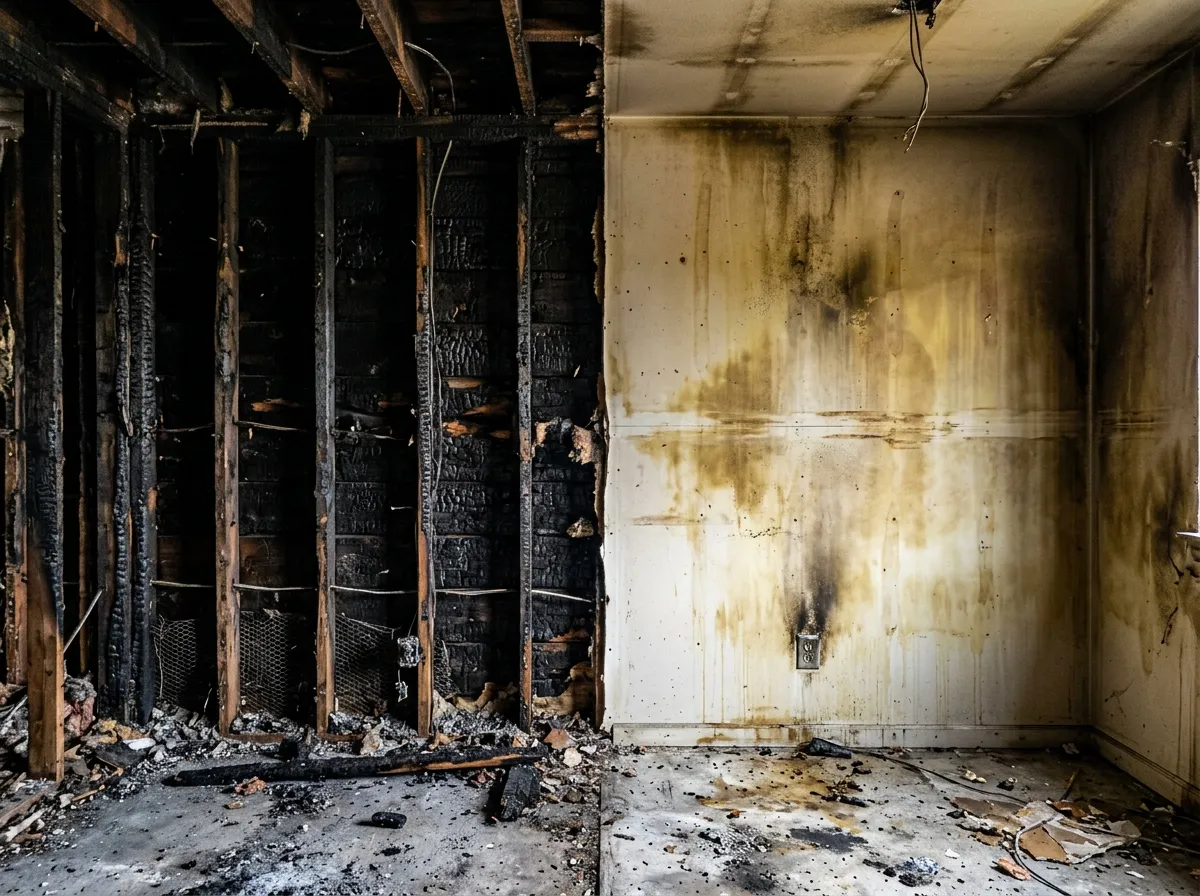
A house fire leaves two different kinds of damage, and insurance treats them as two different problems even though they happen in the same event. Fire damage is what the flames burn. Smoke damage is what the combustion leaves behind on everything the flames did not touch. Homeowners are sometimes surprised to learn that the smoke side of the loss can be larger, more expensive, and more complicated to restore than the fire itself.
This guide explains the difference, how each one is handled on the insurance side, and what actually happens during a professional smoke and fire restoration.
Fire Damage: What the Flames Destroy
Fire damage is the direct result of combustion. Burned framing, scorched drywall, melted finishes, collapsed ceilings, and anything reduced to char. In most structure fires, the burn zone is contained to one or two rooms, but the structural impact can extend beyond that when heat compromises nearby framing or when firefighting water saturates the floor below.
Restoration on the fire side usually involves:
- Structural assessment. A licensed evaluation of framing, sheathing, and load-bearing elements to determine what can be cleaned and what has to be removed.
- Selective demolition. Controlled removal of burned materials, with full containment to keep soot and ash from spreading.
- Temporary stabilization. Board-up, tarping, and shoring to protect the property between the fire and the rebuild.
- Content handling. Anything in the burn zone that can be saved is cataloged and packed out for cleaning.
Fire damage is usually the more visible part of the loss, but in terms of square footage affected, it is often the smaller half of the job.
Smoke Damage: What Combustion Leaves Behind
Smoke damage is what spreads through the rest of the home. It does not care about walls. Smoke moves with air, which means it reaches every room the HVAC system touches, works its way into wall cavities and ceiling bays, and settles onto every porous surface it passes. A kitchen fire that is out in three minutes can leave measurable residue in a bedroom on the other side of the house.
The residue itself comes in different forms depending on what burned:
- Dry smoke. Fast, high-temperature fires on wood and paper. Powdery, less visible, but deeply embedded in fabrics.
- Wet smoke. Slow, smoldering fires on plastics and synthetics. Sticky, dark, and hardest to remove.
- Protein residue. Kitchen fires involving food. Nearly invisible but extremely pungent and hard to deodorize.
- Fuel-oil soot. From furnace puff-backs. Petroleum-based and corrosive to finishes.
Each type requires a different cleaning approach. This is why the same smoke damage scope can be handled easily in one home and be a long, layered project in another.
Why Smoke Damage Cannot Wait
Soot and smoke residue are acidic. Left on surfaces, they continue to etch finishes, tarnish metal, yellow plastics, and work their way deeper into porous materials with every hour that passes. A countertop that could have been cleaned cleanly the day of the fire can be permanently stained a week later. Fabrics that would have come back with a proper launder become non-salvageable after absorbing residue for a few days.
This is the same time pressure pattern as water damage, just operating on different chemistry. Fast response saves material that slow response loses. Our crews arrive in 48 minutes on average and begin air filtration and surface protection on the first visit.
What Professional Smoke and Fire Restoration Looks Like
A complete restoration usually moves through six stages, overlapping where possible to compress the timeline.
- Emergency stabilization. Board-up, tarp, secure utilities, and install temporary HEPA filtration to start pulling soot from the air.
- Assessment and documentation. Full photo documentation, moisture mapping for any water damage from firefighting, and a written scope for your insurance adjuster.
- Content pack-out. Salvageable belongings are inventoried and moved to a climate-controlled facility for specialized cleaning, usually in parallel with structural work.
- Structural cleaning. HEPA vacuuming, dry sponge soot removal, chemical sponges for delicate surfaces, and wet cleaning where appropriate.
- Deodorization. Thermal fogging, hydroxyl generators, or ozone treatment depending on the residue type and whether occupants are present. HVAC duct cleaning is almost always part of this stage.
- Reconstruction. Drywall, paint, flooring, cabinetry, and any other finish work to return the home to pre-loss condition.
Every stage is documented and billed against the claim so your insurance file has the information it needs to move through the adjuster approval process.
How Insurance Handles Each
Fire and smoke damage are typically handled together under the fire peril of a standard homeowners policy. A few patterns to know:
- Fire from a sudden event is usually covered. Kitchen fire, electrical fault, chimney fire, lightning strike.
- Smoke from that same event is covered alongside it. The two losses are usually treated as one claim.
- Smoke from a neighboring fire or wildfire is usually covered under most standard policies as a separate peril.
- Arson by the homeowner is not covered. Obvious, but worth noting.
- Fires caused by known neglect can be denied or reduced.
Coverage details vary by carrier, and the final decision is always between you and your insurer. What we do on the restoration side is make sure the documentation is airtight so the claim gets a fair review.
What Bingham Does
Our crews handle fire and smoke restoration from the first emergency response through the final reconstruction. We carry HEPA scrubbers, thermal fogging equipment, and hydroxyl generators on the truck. We coordinate content pack-out through our own team so your belongings stay in the same chain of custody from the first day. We bill your insurance directly and document the loss from the first call forward.
If your home has smoke or fire damage, the sooner we get on site the more we can save. Call 520-FLOODED and a crew will be on the way.
Frequently Asked Questions
Can smoke damage a home even if there was no visible fire?
Yes, and it happens often. A nearby wildfire, a small appliance fire that was put out quickly, or a neighboring unit fire in a condo can all leave smoke and soot throughout a home without any burned materials. The residue is acidic and continues to damage surfaces until it is professionally removed.
Is smoke damage covered by homeowners insurance?
Smoke damage from a covered fire event is almost always included alongside the fire claim. Smoke from an outside source, like a wildfire drifting into the neighborhood, is also typically covered under most standard policies. Final coverage is a decision between you and your carrier, and Bingham Restoration documents the loss thoroughly so your adjuster has what they need.
How long does smoke odor last if it is not professionally cleaned?
Untreated smoke odor can linger for months or years because the residue works its way into porous materials like drywall, insulation, fabric, and HVAC ductwork. Surface cleaning without proper deodorization rarely resolves it. Professional treatment uses HEPA filtration, thermal fogging, and hydroxyl or ozone depending on the situation.
Need Emergency Restoration Right Now?
Our crews arrive in 48 minutes on average and bill your insurance directly.
Call 520-FLOODED