
Bingham Restoration Resources
Dallas Water Damage: Storms, Slabs & Foundation Movement
Published June 1, 2026
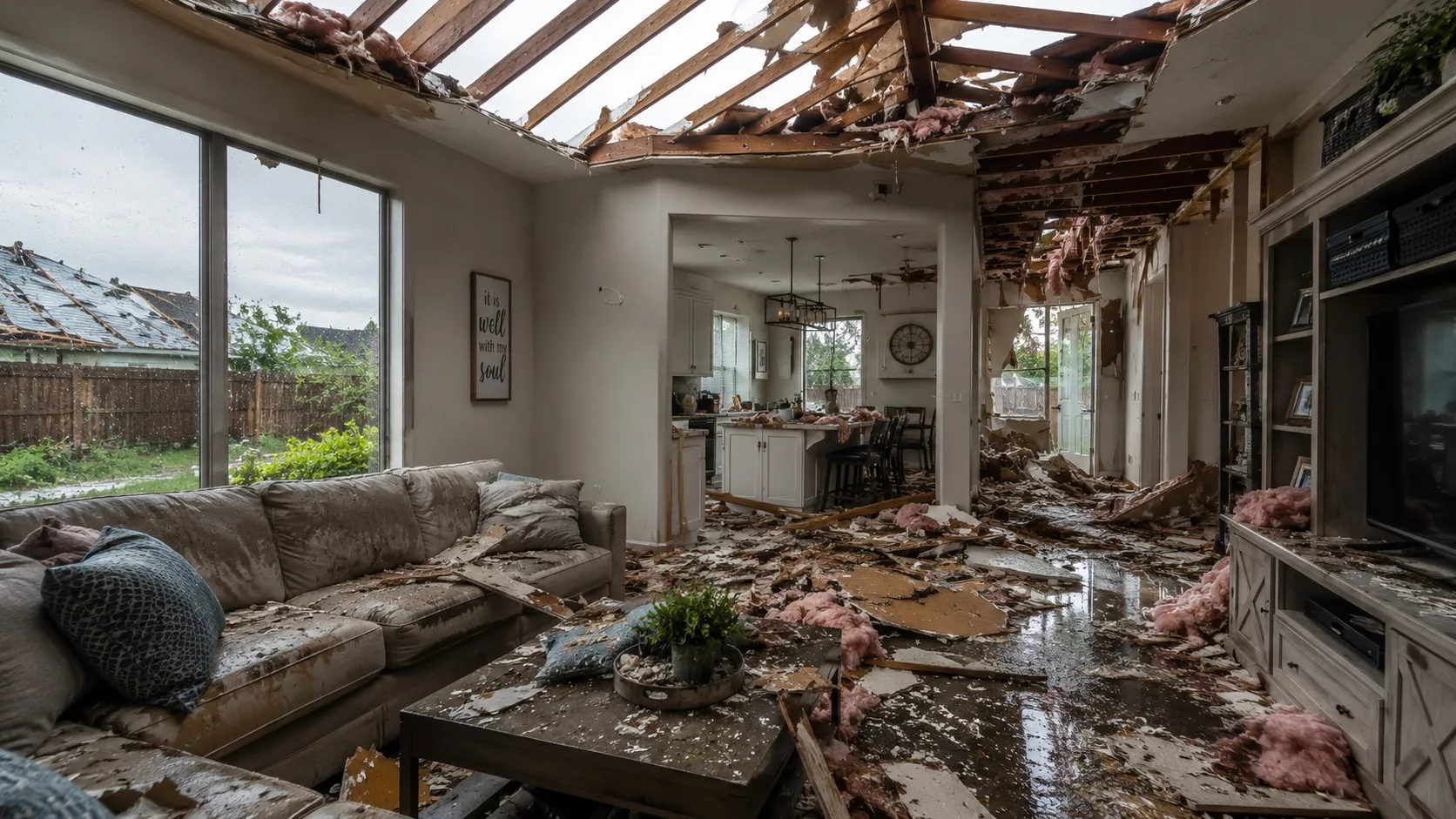
Dallas-Fort Worth water damage looks different than coastal or northern markets. The combination of intense storm cells, expansive black-clay soils, and slab-on-grade construction creates failure modes you do not see in the same volume elsewhere. This guide walks through the patterns we see most often in DFW and what proper response looks like.
The Three Drivers of Dallas Water Damage
Severe Storm Cells
DFW storm season runs March through June, with a smaller secondary peak in early fall. Hail-driven roof damage is the largest single source of water intrusion. The hailstones do not have to puncture; they bruise asphalt shingles, fracture mat fibers, and create slow leaks that appear weeks later when the next rain arrives.
Expansive Clay Soils
The Blackland Prairie soils across most of DFW expand when wet and shrink when dry. The annual swing pulls foundations through measurable movement, opening hairline cracks that water exploits. Foundation maintenance is its own discipline, but the water damage we respond to often starts at a soil-driven crack.
Slab-on-Grade Foundations
Most DFW homes sit on a post-tensioned slab. Supply and drain lines run through or under that slab. When a line fails, the water has no easy path up. It saturates flooring from below, wicks into baseboards, and often only surfaces after significant damage is done.
Where Dallas Homes Get Hit First
- Master bath and kitchen flooring. Both rooms sit on dense plumbing runs and show slab leaks first.
- Window walls in storm-facing rooms. Driven rain finds failed sealant on the windward face during severe weather.
- Garage-to-home thresholds. Storm runoff that exceeds the driveway slope makes its way under the door.
- Roof valleys and chimney flashings. The most common hail-related leak points, surfacing through ceilings the following week.
What Slab Leak Response Looks Like
When the source is a slab leak, the work sequence is different from a typical pipe burst.
- Locate the leak with acoustic listening, thermal imaging, and pressure testing.
- Coordinate with a plumber who handles the slab access and line repair.
- Dry the slab. Specialized mat systems pull moisture out of concrete and through the joint between slab and bottom plate.
- Address affected flooring. Hardwood often requires partial replacement. Tile and stone are usually salvageable if the substrate is dried in time.
- Document the loss in the format DFW insurance adjusters expect, including time-stamped moisture readings.
For more on cost expectations, see our breakdown of water damage restoration cost.
Storm Water Damage Response
Storm-driven water damage usually involves a roof intrusion path that needs immediate tarping before any restoration begins. Our DFW crews carry tarping materials on every truck so we can stabilize the envelope on arrival, then move to interior extraction and drying. If the loss includes hail damage to the roof, we coordinate with your roofing contractor for the permanent repair while the interior work proceeds.
What DFW Homeowners Should Do Before the Next Storm
- Schedule a roof inspection every spring before the storm season peaks.
- Watch your water bill monthly. A 10 to 20 percent jump with no lifestyle change often means a slab leak.
- Walk your foundation perimeter after long dry stretches and after heavy rains. Cracks that move significantly are worth a structural opinion.
- Keep gutters and downspouts clear. The volume DFW storms deliver overwhelms any clog within minutes.
Related Services
Bingham Restoration provides 24/7 water damage restoration across the Dallas-Fort Worth metroplex. Call 520-FLOODED for an active loss.
Frequently Asked Questions
Why is water damage common in Dallas?
DFW combines severe storm cells, expansive clay soils that move with moisture, and slab-on-grade foundations that hide leaks until they surface as floor stains or warped wood. Each of those alone causes water damage. Together they make Dallas one of our highest-volume water markets.
What is a slab leak?
A slab leak is a failure in the copper or PEX supply lines that run through or under the concrete slab of your home. Symptoms include warm spots on the floor, unexplained water bill spikes, and the sound of running water with no fixtures on.
Does homeowners insurance cover slab leaks?
Most policies cover the resulting water damage. Many do not cover the cost of accessing the slab to repair the line itself, which is the plumbing scope rather than the restoration scope. We coordinate both sides on a Dallas slab leak.
Need Emergency Restoration Right Now?
Our crews arrive in 48 minutes on average and bill your insurance directly.
Call 520-FLOODED