
Bingham Restoration Resources
Kansas City Water Damage: Frozen Pipes & Storm Flooding
Published May 10, 2026
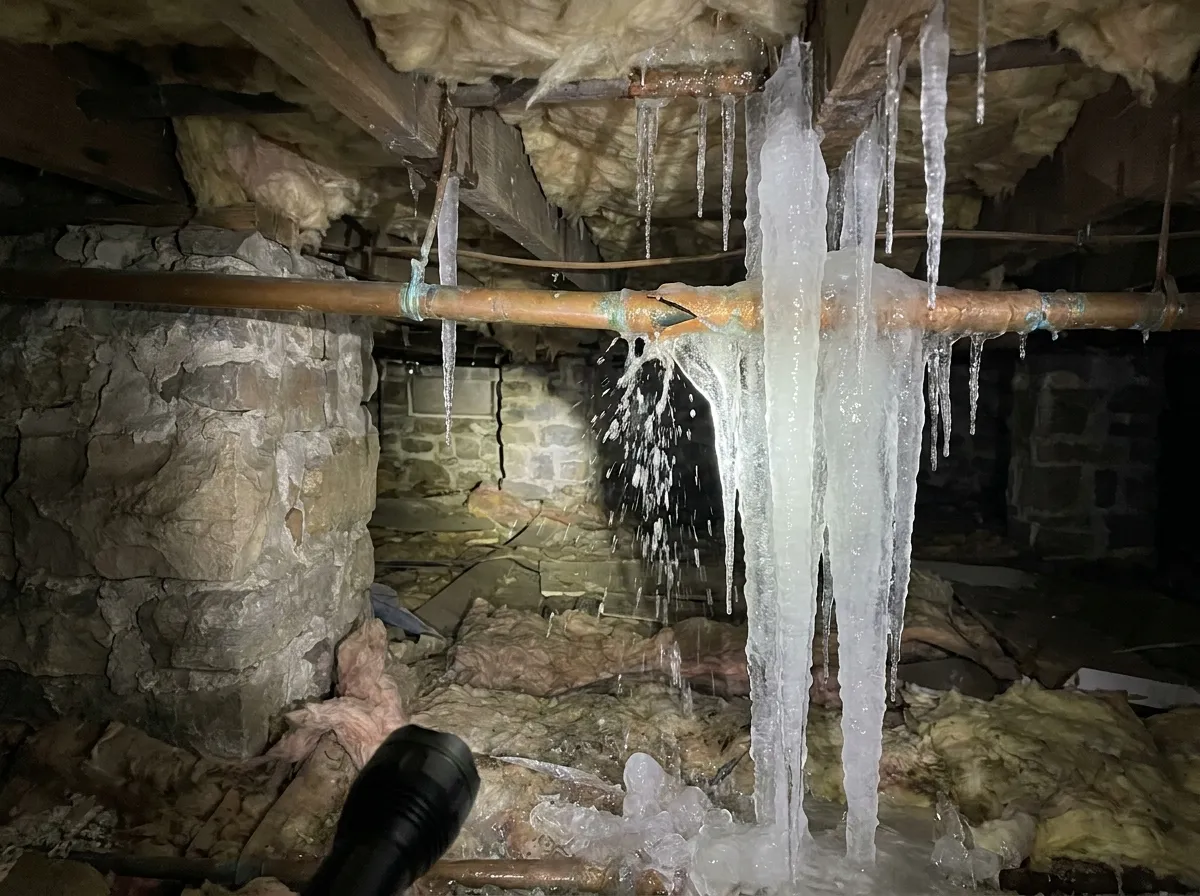
Kansas City has one of the more varied water damage profiles in the country. Winters produce frozen pipe bursts when Arctic air settles over the metro for days at a time. Springs bring severe storms that drop heavy rain and push water through roof and foundation weaknesses. Summers add humidity that accelerates mold growth after any loss. And the metro straddles the Kansas-Missouri state line, which means different insurance markets and slightly different regulatory environments for the same type of job.
This guide walks through the specific risks KC homeowners face, how they show up across the metro, and what a proper restoration response looks like.
Why Kansas City Homes Face Unique Water Damage Risks
Extended winter cold snaps. Kansas City regularly sees multi-day stretches where lows drop into the single digits or below zero. Any uninsulated pipe that runs through a garage, crawlspace, exterior wall, or unheated attic is at risk of freezing and splitting. The classic failure pattern is a pipe that freezes on a cold night, expands just enough to split, and then gushes when the thaw arrives the next day.
Severe spring storms. Spring in the Kansas City metro produces intense thunderstorms, hail, and the occasional tornado. Hail damage to roofs creates water intrusion that does not always show up immediately. A storm in April that damaged the roof becomes a visible ceiling stain in June when the next heavy rain finds the weakness.
Basement flooding from heavy rain. A lot of KC housing stock has full basements, and heavy rain overwhelms drainage around foundations more often than homeowners expect. Homes in older neighborhoods in Independence, Raytown, Gladstone, and Kansas City Kansas see recurring basement moisture that becomes a mold problem if it is not addressed.
Sewer backup during heavy rain events. Combined sewer systems in older sections of the metro can back up during intense storms, pushing wastewater into basement fixtures. This turns a water loss into a Category 3 sewage loss, which has a completely different cleanup protocol.
Ice dams on older roofs. Winter ice dams form when heat from the attic melts snow on the roof and the meltwater refreezes at the eaves. Water backs up under the shingles and enters the home. This is a specific KC failure mode that does not happen in warmer climates.
Summer humidity accelerates mold after any loss. Kansas City summers are humid enough that the 24 to 48 hour mold window is real every time. A loss that sits for three days in August is a different scope than the same loss addressed in six hours.
What a Proper Water Damage Response Looks Like
An IICRC S500 response follows the same sequence regardless of the source. The steps adjust for how much water is present, how contaminated it is, and how long it has been sitting.
- Emergency stabilization. Crew arrives, identifies the source, stops the water, and moves salvageable belongings out of the wet zone.
- Category and class assessment. Category tells us how contaminated the water is. Class tells us how much of the structure is wet. Both drive the drying plan.
- Water extraction. Truck-mounted or portable extraction pulls 80 to 90 percent of the total water volume out of the structure in the first pass.
- Selective demolition. Wet drywall, insulation, flooring, and baseboards that cannot be dried in place are cut out and disposed of.
- Structural drying. Air movers and commercial dehumidifiers run continuously. KC humidity in the warm months means dehumidification has to work harder than it does in a dry climate.
- Daily monitoring. Moisture readings on every wet surface confirm the structure is returning to baseline.
- Documentation and claim coordination. Every stage is photographed and logged. We write an Xactimate line-item estimate and coordinate with your insurance adjuster directly.
What to Do Right Now
If you are standing in a wet home, do these four things while you wait for a crew to arrive.
- Stop the water at the nearest shutoff valve.
- Cut power to the affected area at the breaker if water has reached outlets or appliances.
- Document everything with photos and video before you move anything.
- Call a certified restoration company. A real 24/7 operation answers live and dispatches immediately.
Do not run a consumer wet vac on more than a small puddle, and do not run box fans without a dehumidifier. Both push moisture into places it should not go.
What Bingham Does in Kansas City
Our water damage response crews serve Kansas City, Overland Park, Olathe, Lee’s Summit, Independence, Shawnee, Blue Springs, Lenexa, Liberty, Gladstone, Raytown, Prairie Village, North Kansas City, Lawrence, Topeka, St. Joseph, Leavenworth, Bonner Springs, and Warrensburg.
We follow IICRC S500 protocols on every water job, document the scope with photos and moisture mapping, and coordinate directly with your insurance adjuster from the first call forward. We bill insurance directly and handle the paperwork so you can focus on getting your home back.
Our crews arrive in 48 minutes on average across the metro. If you are looking at a water loss right now, do not wait. Call 520-FLOODED and a Bingham crew will be on the way.
Frequently Asked Questions
Why are frozen pipe bursts so common in Kansas City winters?
Kansas City regularly sees extended cold snaps where overnight lows drop well below freezing for multiple days in a row. Any uninsulated pipe in a garage, crawlspace, exterior wall, or unheated attic can freeze, expand, and split. The split is often not visible until the thaw, and then water flows from the failure at full residential pressure. The worst freeze events produce pipe burst calls across the entire metro.
Does my Kansas or Missouri homeowners insurance cover water damage?
Sudden and accidental water losses from pipe failures, appliance leaks, and some weather events are generally covered under standard homeowners policies in both Kansas and Missouri. Gradual leaks and flooding from outside rising water are usually excluded and require separate flood insurance. Final coverage is a decision between you and your carrier, and Bingham Restoration documents the loss thoroughly for your claim file.
How fast does mold grow after a water loss in Kansas City?
The IICRC baseline is 24 to 48 hours. Kansas City summers are humid enough that growth pushes toward the faster end of that window. A fast response and proper dehumidification are the difference between drying in place and removing wet drywall and flooring.
Need Emergency Restoration Right Now?
Our crews arrive in 48 minutes on average and bill your insurance directly.
Call 520-FLOODED