
Bingham Restoration Resources
Water Damage in Las Vegas: Desert Flash Floods
Published April 21, 2026
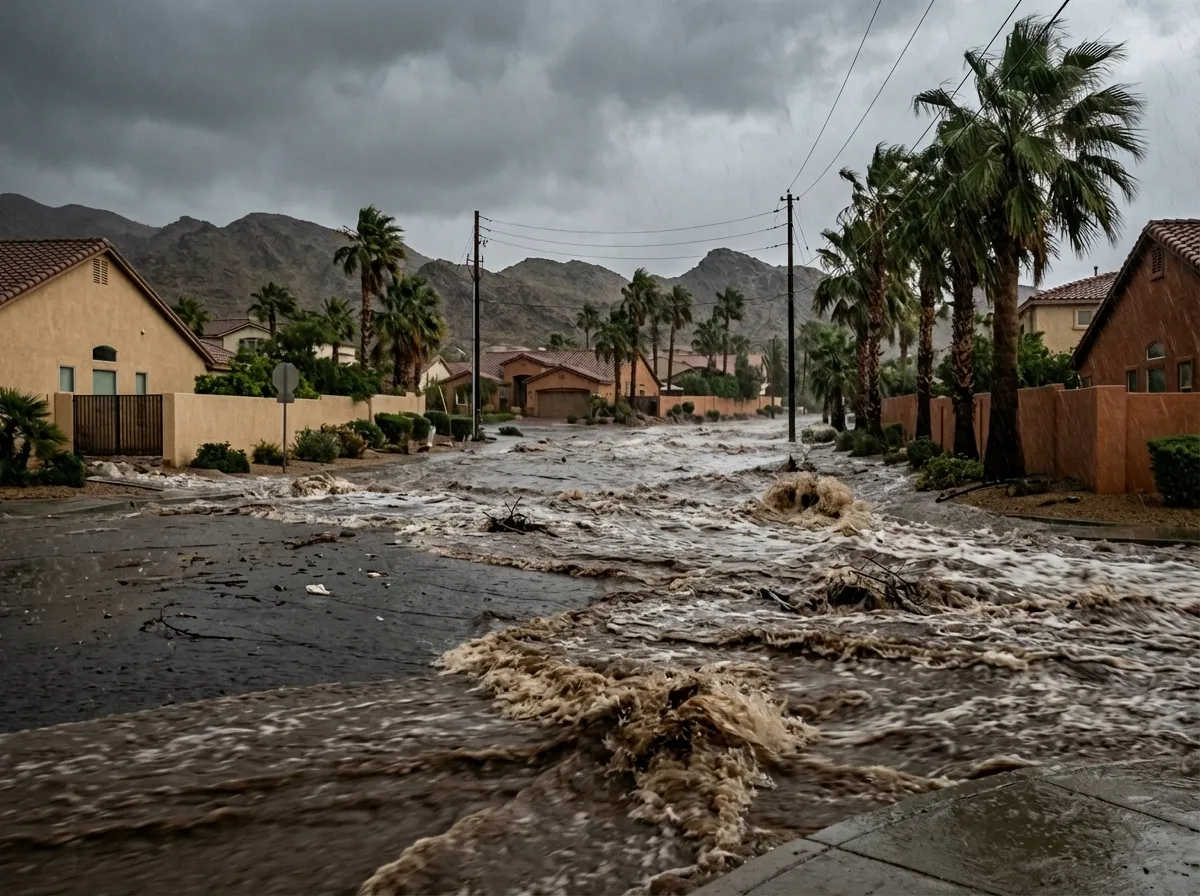
Las Vegas is a desert, and for most of the year the rain story ends there. Then a summer monsoon cell builds over the Spring Mountains, drops half an inch of water on Summerlin in fifteen minutes, and the entire Vegas Valley remembers that desert floods are some of the fastest and most destructive water events in the country. Flash flooding is not a theoretical risk here. It is a recurring pattern that shapes what restoration looks like in this market.
This guide is for Las Vegas homeowners who want to understand why their homes flood in a desert, what the damage actually looks like, and what to do in the first hour when water is already inside.
Why Desert Homes Flood Faster Than Most
The counterintuitive part of desert flooding is that the ground is the problem, not the rainfall. Vegas Valley soil is a mix of hard caliche, compacted clay, and gravel, and it behaves more like pavement than like absorbent earth. When a summer storm hits, very little of the water soaks in. Almost all of it runs across the surface looking for somewhere to go.
Three things make this worse than it would be in a wetter climate.
First, the grading is built for the climate we usually have. Yards, driveways, and landscaping in most Vegas neighborhoods are designed for the 364 dry days a year, not the one day the sky opens up. Water finds shortcuts around retaining walls and cuts new paths overnight.
Second, washes and channels fill fast. The engineered flood channels across the Valley are designed for significant volumes, but a strong monsoon cell can still push water over the banks in specific spots. Homes adjacent to a wash or at a low point in a drainage area see the most serious losses.
Third, the storm drain system is meant for predictable flow. Short, intense bursts of rain overwhelm the system long before they would in a climate built for regular rainfall. Water that cannot drain finds basements, garages, and any opening lower than street level.
The result is that a Las Vegas home can take on significant water damage from a storm that would pass as ordinary rain anywhere east of the Mississippi.
What Flash Flood Damage Usually Looks Like
Across thousands of Vegas-area water calls, the same patterns come up after flash flood events.
- Garage flooding. The most common entry point. Street water crests the driveway, pools against the garage door, and seeps under the seal. Everything stored on the floor gets soaked.
- Ground-floor intrusion. Water finds its way through sliding patio doors and low windows when the volume is high enough. Hardwood and engineered flooring at the affected edge usually has to come out.
- Wash-adjacent flooding. Homes near engineered washes can see water rise against the exterior walls. This is the most serious category and often involves questions about flood insurance coverage.
- Roof pooling on flat sections. Many Vegas homes have flat or low-slope roof sections. Monsoon cells can overwhelm the drains and push water back through roof penetrations into the ceiling below.
- Swamp cooler leaks. Some older Vegas homes still use evaporative cooling. The units on the roof can fail or overflow during heavy rain.
If any of those sound like your home, a professional assessment the same day can often save materials that a 24-hour delay would lose.
What to Do in the First Hour
The first hour after water enters your home is the most important hour of the entire restoration. Here is the short list.
- Make sure the space is safe. If water is near outlets, appliances, or the panel, turn off the breaker for that area before you enter.
- Stop any active source. Close supply valves if the water is from plumbing. For outside water, focus on diverting new water away from the existing entry points.
- Document everything with photos and video. Wide shots, then close-ups of every wet surface and damaged item. This is the backbone of your insurance claim.
- Move valuables out of the zone. Rugs, upholstered furniture, documents, and electronics. Anything porous takes priority.
- Call a certified restoration company. Bingham crews arrive in 48 minutes on average across the Vegas Valley and begin extraction and drying immediately.
What you do not want to do is wait for the weather to pass before calling. Extraction that starts inside the first few hours routinely saves materials that a next-day response would lose.
Why Vegas Has a Tighter Mold Window
Mold growth typically begins inside a 24 to 48 hour window in standard conditions. Las Vegas summers tighten that window because indoor temperatures climb fast once the AC is overwhelmed or the power drops during a storm. Warm plus wet equals accelerated mold colonization, and that means even small delays can turn a water claim into a combined water and mold claim.
The practical implication is simple: speed matters here more than it does in cooler climates. Our Vegas Valley crews are staged so that monsoon calls get extraction started fast, and we follow up with full structural drying and monitoring through to completion.
What Bingham Does in the Vegas Valley
Our crews serve Henderson, North Las Vegas, Summerlin, Green Valley, Spring Valley, Paradise, Enterprise, Centennial Hills, and the surrounding Vegas Valley communities. We run 24/7 dispatch, arrive in 48 minutes on average, and carry enough extraction and dehumidification to handle a full-scale flash flood event. Every job includes full photo documentation, moisture mapping, and a daily drying log.
We bill your insurance directly and communicate with your adjuster throughout the project. If flood insurance is part of the picture, we document the event in a way that supports both carriers.
If water is already inside your home, the clock is running. Call 520-FLOODED and a Bingham crew will be on the way.
Frequently Asked Questions
Does it really flood in Las Vegas?
Yes, and more often than most people expect. The Vegas Valley averages around four inches of rain per year, but much of that arrives in a handful of intense summer monsoon cells. Hard desert soil does not absorb the runoff, which overwhelms storm drains and pushes water into garages, driveways, and homes within minutes.
Does homeowners insurance cover flash flood damage in Vegas?
Rain that enters through a damaged roof or wind-driven through a window is usually covered by a standard homeowners policy. Water that rises from street flooding or wash overflow is typically excluded and requires a separate flood policy. Final coverage is a decision between you and your carrier, and Bingham Restoration documents the loss thoroughly either way.
How fast do I need to act after a flash flood?
As fast as possible. Vegas summer temperatures push indoor humidity up once the AC is overwhelmed or shut down, which shortens the window before mold starts to grow. Bingham crews arrive in 48 minutes on average and begin extraction on site.
Need Emergency Restoration Right Now?
Our crews arrive in 48 minutes on average and bill your insurance directly.
Call 520-FLOODED