
Bingham Restoration Resources
Phoenix Water Damage Restoration: Monsoon Survival Guide
Published April 17, 2026
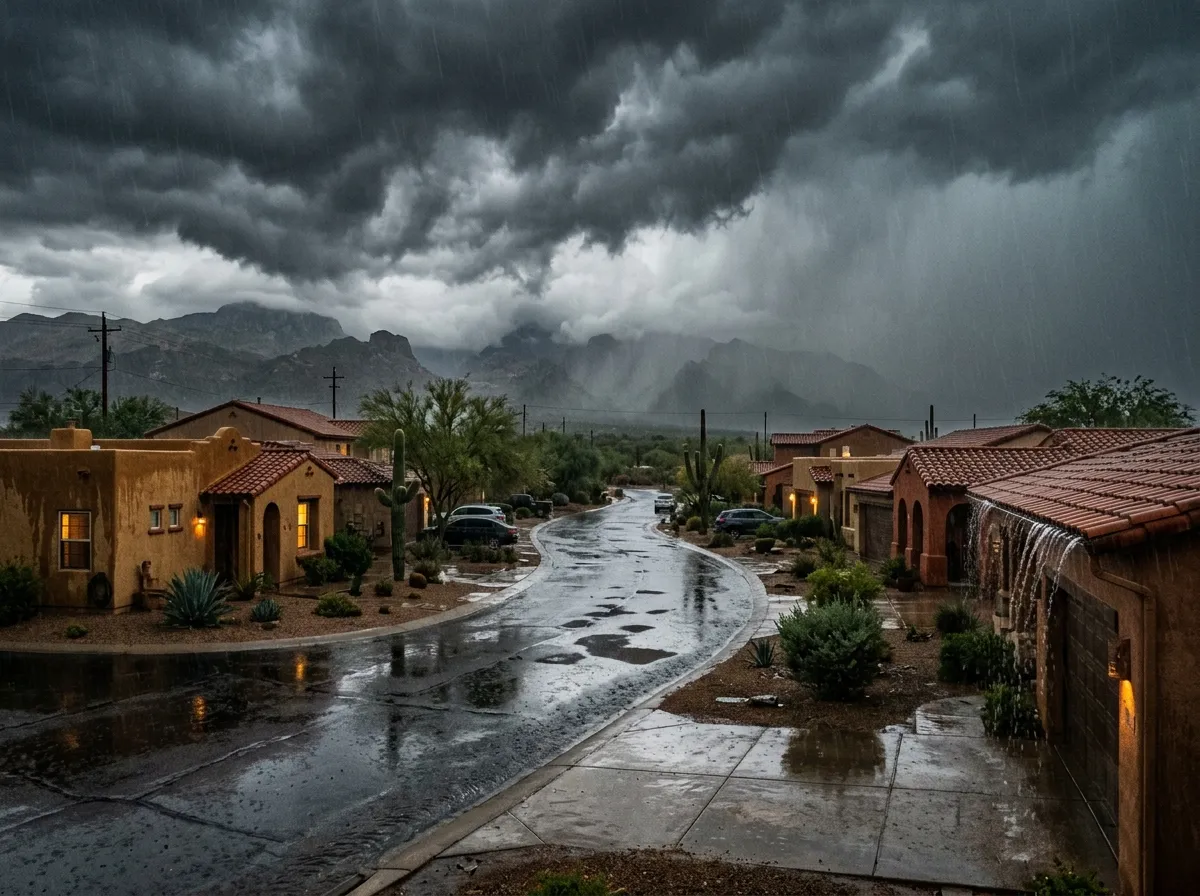
Phoenix is a desert until it is not. For most of the year, water damage in the Valley is a plumbing story: a failed supply line, a slab leak, a water heater that finally gives out. Then monsoon season arrives, the sky opens up, and the whole calculation changes. A storm that would pass for ordinary rain in the Midwest can drop an inch of water on caliche soil in twenty minutes, and caliche does not absorb much of anything. The water has to go somewhere, and somewhere is often your home.
This guide is for Phoenix homeowners who want to understand what monsoon water damage actually looks like, why desert conditions make it more dangerous than it seems, and what to do when a storm pushes water through a roof, a window, or a garage door.
Why Phoenix Water Damage Is Its Own Problem
Restoration professionals in wet climates have a different job than we do in the Valley. In Seattle, the challenge is constant moisture and slow leaks. In Phoenix, the challenge is the opposite. Building materials here spend most of the year bone dry. When water hits them suddenly, three things happen that are unique to our climate.
First, porous materials soak up water faster. Dry drywall, dry wood framing, and dry adobe finishes absorb moisture aggressively when water finally reaches them. A one-time event can saturate materials that have been arid for years.
Second, indoor temperatures accelerate mold growth. In summer, even air-conditioned Phoenix homes run warmer than most restoration textbook scenarios. Warm and wet is exactly what mold needs, and the 24 to 48 hour window tightens to something closer to 18 to 36 hours once indoor humidity climbs.
Third, drainage infrastructure is built for a dry climate. Roofs in Phoenix are often low-slope or flat, built to shed the sun rather than a storm. Scuppers and drains were sized for the climate we usually have, not the one monsoons deliver. When the storm exceeds that design, water backs up, pools, and finds its way inside through any weakness in the envelope.
The Most Common Monsoon Losses We See
Over thousands of Phoenix-area water calls, a handful of patterns come up again and again during monsoon season. If any of these sound like your home, this is the time to inspect before the next storm cell rolls in.
- Flat and low-slope roof pooling. Blocked scuppers and aging modified-bitumen membranes let water sit and eventually penetrate the deck. Interior damage usually shows up on the ceiling below the lowest point of the roof.
- Swamp cooler leaks. Evaporative coolers are popular in older Phoenix homes, and the lines or pans on the roof often fail during heavy rain when the homeowner shuts them off and water pools in the housing.
- Garage door flooding. When a storm cell drops water faster than the street can carry it, the garage is usually the first room to flood. Drywall, baseboards, and any stored belongings get saturated.
- Window and patio door intrusion. Wind-driven rain finds gaps in weatherstripping and deteriorated caulk. The damage often appears as staining on the wall below the window rather than a visible leak.
- Wash overflow. Homes adjacent to a wash or retention basin can see water rise fast during a microburst. This is often the most serious category and usually involves flood insurance considerations.
What to Do the Moment Water Enters
Speed matters anywhere, but it matters more in Phoenix because the mold window is shorter. Here is the short list that gives your home the best chance of coming through cleanly.
- Make sure the space is safe. If water is near outlets, appliances, or the electrical panel, turn off the breaker for that area before you enter.
- Document everything with photos and video. Wide shots first, then close-ups of every wet surface and every damaged item. This is what your claim will be built on.
- Get the water out. If the volume is small, extract with towels and a wet vac. If it is more than that, do not wait. Call a restoration crew with truck-mounted extraction.
- Move valuables and soft goods out of the zone. Rugs, upholstered furniture, documents, and electronics. Anything porous takes priority.
- Call 520-FLOODED. Bingham crews cover the entire Valley and arrive in 48 minutes on average. We bill your insurance directly and document the loss from the first call forward.
What you do not want to do is run box fans for two days and hope it dries on its own. Phoenix homes with summer cooling loads do not move enough air to dry wet framing, and the mold window closes before consumer equipment can catch up.
Monsoon Preparation Checklist
If you are reading this before the storms arrive, a few hours of prep now can save a restoration claim later.
- Clear roof drains and scuppers of palm debris and dust buildup.
- Inspect roof penetrations, vent stacks, and the edges of any flat or low-slope sections for cracking or separation.
- Reseal weatherstripping and caulk around windows and patio doors that take direct weather exposure.
- Check your swamp cooler lines and pan seals if the unit is still in service.
- Raise valuables in the garage off the floor by a few inches.
- Photograph the current condition of your roof, exterior walls, and any vulnerable interiors. A date-stamped baseline makes any future claim cleaner.
What Bingham Does in the Valley
We run 24/7 crews across Phoenix, Scottsdale, Mesa, Tempe, Chandler, Gilbert, Glendale, and Peoria. Our trucks carry extraction, dehumidification, containment, and HEPA filtration built for the scale a monsoon event can create. Every job starts with a full moisture map and photo documentation. We coordinate directly with your insurance adjuster and keep a daily drying log so the claim file has the data it needs.
If a monsoon storm has already moved through your neighborhood and you are staring at a wet ceiling or a flooded garage, the clock is running. Call 520-FLOODED and a Bingham crew will be on the way.
Frequently Asked Questions
When is monsoon season in Phoenix?
The official North American monsoon runs from June 15 through September 30. In practice, the most intense storms in the Valley usually hit between early July and mid-August, with flash flood watches issued several times a week during the peak.
Does homeowners insurance cover monsoon flooding?
Wind-driven rain that enters through a damaged roof is usually covered by a standard policy. Water that rises from wash overflow, street flooding, or saturated ground is typically excluded and requires a separate flood policy. Final coverage is a decision between you and your carrier, and Bingham Restoration will document your loss thoroughly either way.
How fast should I call after a monsoon water event?
As fast as you can. Phoenix summer temperatures push indoor humidity up quickly, which cuts the mold window from the typical 48 hours to closer to 24 in some cases. Bingham arrives in 48 minutes on average across the Valley and begins extraction on site.
Need Emergency Restoration Right Now?
Our crews arrive in 48 minutes on average and bill your insurance directly.
Call 520-FLOODED