
Bingham Restoration Resources
Tucson Water Damage: Monsoon Season & Year-Round Risks
Published May 6, 2026
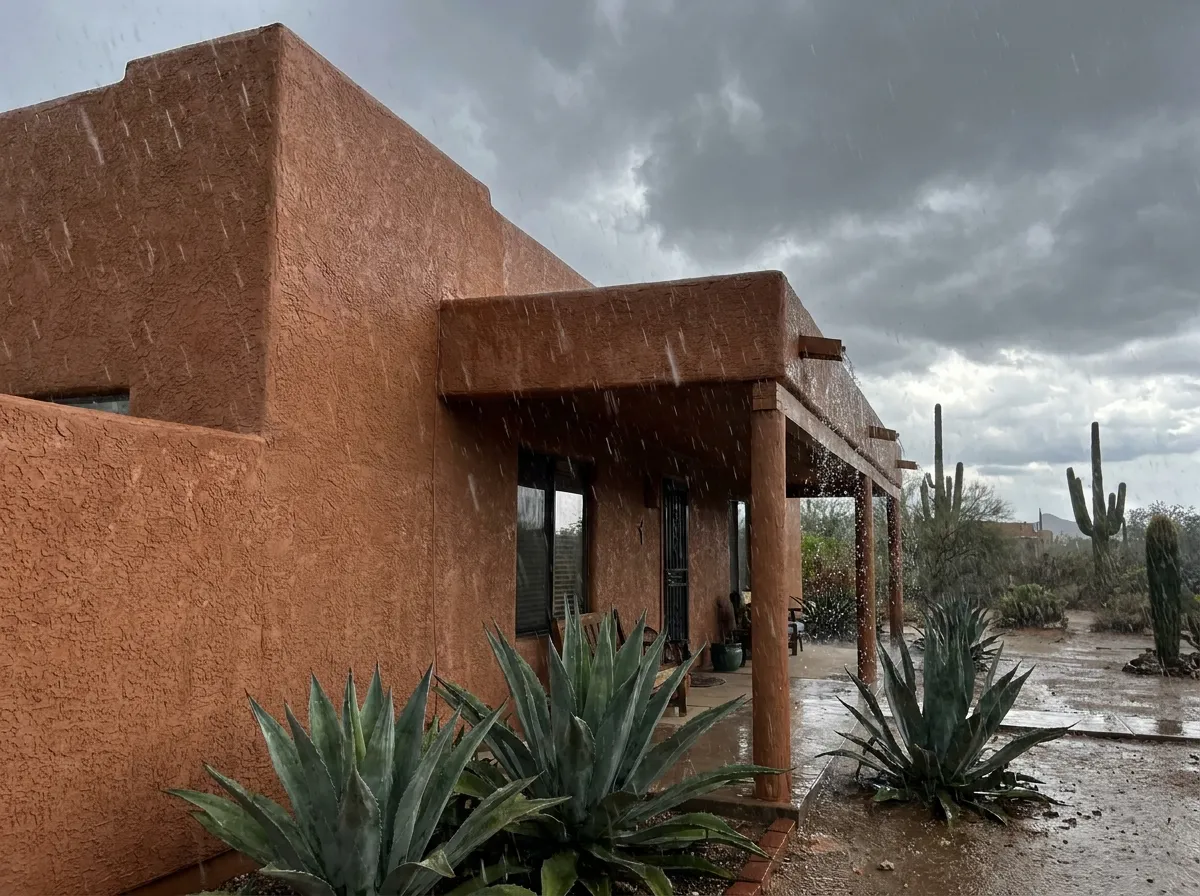
Tucson is not the city most people picture when they think about water damage, which is exactly why the losses here often go unaddressed longer than they should. The city’s water damage profile is defined by two opposing conditions: long dry stretches where interior humidity drops below 20 percent, and a concentrated monsoon season where intense storms deliver more rain in a week than some months see all year. Both conditions create their own kinds of failures, and the right response depends on which one you are dealing with.
This guide walks through the specific risks Tucson homeowners face, how they show up across the metro, and what a proper restoration response looks like.
Why Tucson Homes Face Unique Water Damage Risks
Tucson averages around 12 inches of rain a year, concentrated into the monsoon season from mid-June through September. The dry months put their own stress on homes, and the transition between the two seasons creates specific failure points.
Monsoon wind-driven rain. Tucson monsoon storms often arrive with strong winds that push rain horizontally into roof edges, window frames, and stucco penetrations. Homes in Oro Valley, Catalina Foothills, Tanque Verde, and the hillside neighborhoods around Marana are especially exposed because the elevated terrain catches wind that lower-elevation homes miss.
Flash flooding on washes. The washes that stay dry eleven months of the year can run several feet deep during a monsoon storm. Homes near Rillito, Pantano, and the Santa Cruz River are the obvious risk cases, but plenty of neighborhoods have smaller washes that only become a problem during a storm event.
Stucco crack water intrusion. Desert temperature swings between day and night, and between seasons, crack stucco over time. During dry months those cracks look cosmetic. During the first monsoon of the year, they become the entry point for wind-driven rain.
Aging roof membranes. Many mid-century Tucson homes have flat or low-slope roofs with foam or built-up membrane systems. Desert sun degrades membrane faster than it does in milder climates, and the first storm after a dry season is often when the weak spots appear.
Plumbing failures from calcium and hard water. Tucson water is hard, and over decades calcium buildup stresses supply lines, water heaters, and fixture valves. The failures tend to cluster in older homes that have not had plumbing updated.
Swamp cooler and HVAC drain issues. A significant share of Tucson homes still use evaporative cooling. When a swamp cooler drain line fails or the float valve sticks, water can run for hours into walls or ceilings before anyone notices.
What a Proper Water Damage Response Looks Like
An IICRC S500 response follows the same sequence regardless of the source. The steps adjust for how much water is present, how contaminated it is, and how long it has been sitting.
- Emergency stabilization. Crew arrives, identifies the source, stops the water, and moves salvageable belongings out of the wet zone.
- Category and class assessment. Category tells us how contaminated the water is. Class tells us how much of the structure is wet. Both drive the drying plan.
- Water extraction. Truck-mounted or portable extraction pulls 80 to 90 percent of the total water volume out of the structure in the first pass.
- Selective demolition. Wet drywall, insulation, flooring, and baseboards that cannot be dried in place are cut out and disposed of.
- Structural drying. Air movers and commercial dehumidifiers run continuously. Outside monsoon season, Tucson’s dry ambient air helps drying move faster than it does in humid climates. During monsoon weeks, dehumidification has to work harder.
- Daily monitoring. Moisture readings on every wet surface confirm the structure is returning to baseline.
- Documentation and claim coordination. Every stage is photographed and logged. We write an Xactimate line-item estimate and coordinate with your insurance adjuster directly.
What to Do Right Now
If you are standing in a wet home, do these four things while you wait for a crew to arrive.
- Stop the water at the nearest shutoff valve if the source is interior.
- Cut power to the affected area at the breaker if water has reached outlets or appliances.
- Document everything with photos and video before you move anything.
- Call a certified restoration company. A real 24/7 operation answers live and dispatches immediately.
What Bingham Does in Tucson
Our water damage response crews serve Tucson, Oro Valley, Marana, Vail, Sahuarita, Green Valley, Catalina Foothills, Rita Ranch, Tanque Verde, South Tucson, Casas Adobes, Sierra Vista, Nogales, Casa Grande, Benson, and Eloy.
We follow IICRC S500 protocols on every water job, document the scope with photos and moisture mapping, and coordinate directly with your insurance adjuster from the first call forward. We bill insurance directly and handle the paperwork so you can focus on getting your home back.
Our crews arrive in 48 minutes on average across the metro. If you are looking at a water loss right now, do not wait. Call 520-FLOODED and a Bingham crew will be on the way.
Frequently Asked Questions
When is Tucson monsoon season and why does it cause so much water damage?
The Tucson monsoon runs roughly from mid-June through September, with the most intense activity in July and August. Storms arrive fast, drop large amounts of rain in short bursts, and produce wind-driven rain that finds every roof flashing weakness and window seal failure in the city. Flash flooding on normally dry washes adds an exterior water source that catches homeowners off guard.
Does my Arizona homeowners insurance cover monsoon water damage?
Coverage depends on the source. Wind-driven rain that enters through roof damage is usually covered. Rising water from a flooded wash is treated as flood damage and typically requires separate flood insurance. Final coverage is a decision between you and your carrier, and Bingham Restoration documents the loss thoroughly for your claim file.
How fast does mold grow after a water loss in Tucson?
The IICRC baseline is 24 to 48 hours. During the humid monsoon months, interior humidity runs higher than usual and growth pushes toward the faster end of that window. The rest of the year, dry desert air actually helps the drying phase move faster than it would in a wetter climate.
Need Emergency Restoration Right Now?
Our crews arrive in 48 minutes on average and bill your insurance directly.
Call 520-FLOODED