
Bingham Restoration Resources
Crawlspace Water Damage: The Hidden Driver of Indoor Air Quality
Published June 11, 2026
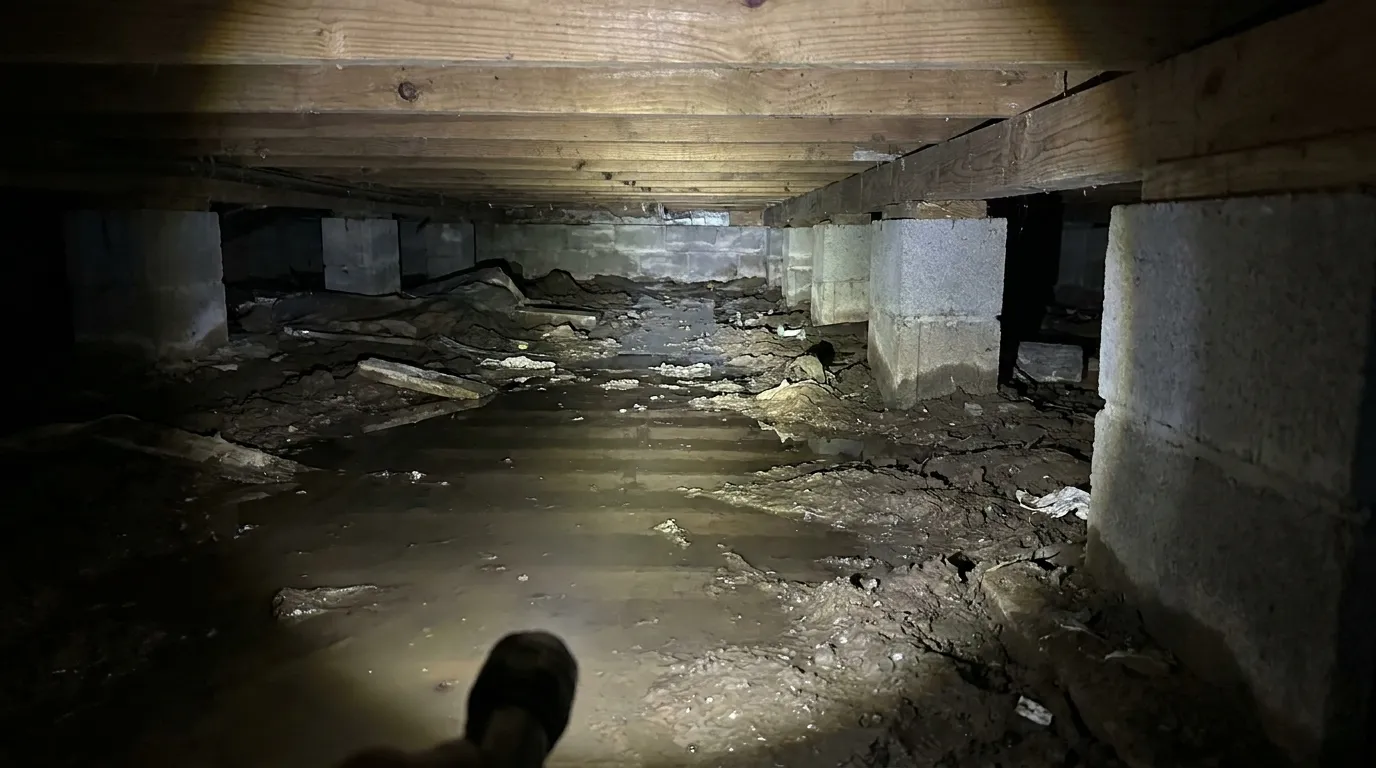
The crawlspace is the most influential space in a home that almost nobody looks at. The condition of the air down there sets the condition of the air upstairs. When water damage happens in a crawlspace, the consequences show up far from the source. This guide explains why crawlspaces matter, what proper water damage response involves, and what homeowners can do to prevent the next event.
The Stack Effect
Warm air rises. In a home, warm air leaving the upper floors creates negative pressure at the bottom, which pulls air up from the lowest point in the structure. That lowest point is the crawlspace. Air quality readings consistently show 40 to 50 percent of main-floor air originated in the crawlspace.
This means:
- Mold spores in the crawlspace land in living rooms.
- Crawlspace odors permeate upstairs textiles.
- Crawlspace humidity raises whole-home humidity in summer.
A wet crawlspace is not a contained problem.
Common Sources of Crawlspace Water
- Grading and drainage. Surface water sloping toward the foundation.
- Plumbing failures. Supply or drain leaks dripping into the crawlspace.
- Groundwater intrusion. High water table or after-storm rise.
- HVAC condensate. Failed condensate lines from upstairs air handlers.
- Missing or damaged vapor barrier. Allows continuous soil moisture evaporation into the air.
A proper assessment identifies which of these is in play before any remediation begins.
The Remediation Scope
- Standing water extraction with appropriate PPE for the water category.
- Saturated material removal. Old vapor barriers, fallen insulation, organic debris.
- Antimicrobial treatment on exposed framing and substrate.
- Drying with crawlspace-rated air movers and dehumidifiers, monitored to verified equilibrium.
- Vapor barrier replacement. Reinforced poly, seams taped, sealed up the foundation wall.
- Insulation replacement where saturated or compromised.
- Drainage and pump verification. Sump pump test, perimeter drainage review.
- Air quality verification in the crawlspace and on the main floor.
What Homeowners Get Wrong
- Ignoring it because it is “out of sight.” The air is not out of sight; it is in your lungs upstairs.
- Spraying bleach on visible mold. Surface treatment without moisture control regrows in weeks.
- Adding insulation without addressing moisture. Wet insulation is worse than no insulation.
- DIY vapor barrier installation over standing water. Traps moisture against the soil and creates an even worse environment.
For a deeper look at the related mold side, see black mold symptoms.
When to Bring Us In
If your crawlspace has standing water, visible mold, a musty smell that reaches upstairs, or has not been inspected in over five years, schedule an assessment. We document conditions with photos and moisture readings and provide a scope grounded in data.
Related Services
Bingham Restoration provides crawlspace water damage and mold remediation as part of water damage restoration and mold remediation services. Call 520-FLOODED for an assessment.
Frequently Asked Questions
How does crawlspace moisture affect upstairs air?
Roughly 40 to 50 percent of the air on the main floor of a home originates in the crawlspace through what is called the stack effect. Moisture, odors, and mold spores from a wet crawlspace migrate upward into living areas constantly.
Do I need a vapor barrier in my crawlspace?
In almost every climate, yes. A properly sealed vapor barrier on the ground prevents soil moisture from evaporating into the crawlspace air. It is the single most effective intervention for chronic crawlspace moisture.
Should crawlspaces be vented or sealed?
Building science consensus has shifted toward sealed and conditioned crawlspaces in most climates. Traditional venting often draws humid outdoor air into a cooler crawlspace, where it condenses on framing. Local code and climate dictate the right approach.
Need Emergency Restoration Right Now?
Our crews arrive in 48 minutes on average and bill your insurance directly.
Call 520-FLOODED