
Bingham Restoration Resources
Lead Paint Testing: When Older Homes Need It
Published June 22, 2026
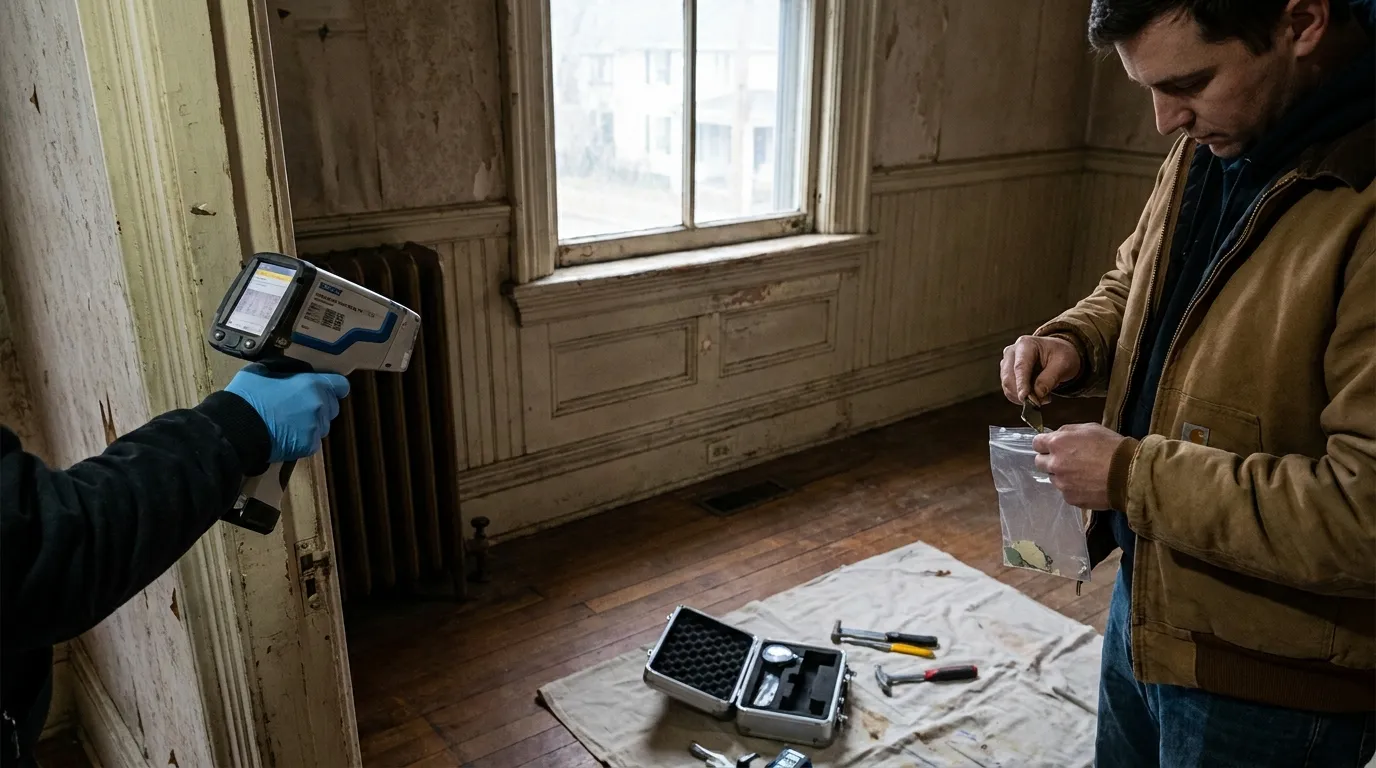
Lead paint testing is one of those services that most homeowners never think about until a renovation, a real estate transaction, or a child’s blood-lead test forces the conversation. By then, the timeline pressure is real. This guide walks through what testing actually involves, when it is required, and how to read the report.
Why Lead Paint Testing Exists
Lead-based paint was banned for residential use in 1978, but it remains in tens of millions of homes built before that date. The hazard is not the painted surface in good condition — intact lead paint poses limited risk. The hazard is deteriorated paint (chipping, peeling, chalking) and dust generated when paint is disturbed during renovation, demolition, or weathering.
Children under six are the highest-risk group. Even small amounts of lead dust on hands and floors cause measurable blood-lead elevation, with documented effects on cognitive development.
When Testing Is Required or Strongly Recommended
- Pre-1978 homes undergoing renovation that will disturb more than six square feet of paint per room interior, or 20 square feet exterior.
- Pre-1978 rentals at every tenant turnover, in many jurisdictions.
- Real estate transactions on pre-1978 homes, where federal law requires lead disclosure.
- Childcare facilities and schools built before 1978.
- Any home where a child has elevated blood-lead and the source is unclear.
If your home falls into any of these categories, testing is the right move before any disturbance work begins.
Two Testing Methodologies
XRF Analyzer
A handheld X-ray fluorescence device gives real-time, non-destructive readings of lead content in a painted surface. Best for: comprehensive whole-home assessments, real estate transactions, and rental compliance. Results are immediate.
Lab Sampling
Paint chip samples are removed and sent to an accredited lab for analysis. Best for: spot-check confirmation, areas where XRF results are inconclusive, and small-scope projects. Results take 24 to 72 hours.
We use both methodologies depending on the project scope and budget.
What the Inspection Looks Like
- Walkthrough. Identify painted surfaces by component (trim, walls, doors, windows, exterior siding).
- Sampling plan. Either every component in every room (full assessment) or risk-based sampling (limited).
- On-site testing or sample collection.
- Lab analysis (where applicable).
- Written report with results by surface, hazard classification, and recommendations.
Reading the Results
The report lists each tested surface with a lead content measurement, typically in milligrams per square centimeter (mg/cm²) for XRF or percent by weight for lab samples. The federal action level for lead-based paint is 1.0 mg/cm² or 0.5 percent by weight.
- Below action level: Surface is not lead-based paint under federal definition. Standard work practices apply.
- At or above action level: Surface is lead-based paint. EPA RRP rules apply for any disturbance work, requiring certified renovators and lead-safe practices.
A positive result does not mean the paint must be removed immediately. It means any future disturbance work must follow specific safety protocols.
What Happens After a Positive Test
Three paths forward:
- Encapsulation. A specialized coating seals the lead paint in place. Lowest cost option, requires periodic inspection.
- Enclosure. Covering the painted surface with new material (drywall, paneling).
- Removal. Full paint removal by a certified abatement contractor. Highest cost, permanently eliminates the hazard.
For most homeowners, encapsulation or enclosure during a planned renovation is the practical answer. Full removal is typically reserved for child-occupied facilities and rental compliance scenarios.
How Lead Testing Fits With Other Restoration Work
Restoration projects in pre-1978 homes routinely encounter lead paint. A water loss requiring flood cuts on a 1950s home, for example, disturbs paint that may contain lead. Testing before the cut keeps the project compliant with RRP rules and prevents an unexpected hazard mid-project.
For broader context on environmental testing as a category, see environmental testing before restoration.
Related Services
Bingham Restoration provides lead paint testing as part of environmental testing services. Call 520-FLOODED to schedule an assessment.
Frequently Asked Questions
Do all old houses have lead paint?
Not all, but the odds are high. The EPA estimates 87 percent of homes built before 1940 contain lead-based paint, 69 percent of homes from 1940 to 1959, and 24 percent of homes built between 1960 and 1977. After 1978, residential lead paint was banned, so newer homes are almost always clear.
Is lead paint testing required before renovation?
Under EPA Renovation, Repair, and Painting (RRP) rules, contractors disturbing more than six square feet of paint in pre-1978 housing must either presume lead is present and work under lead-safe practices, or test and confirm absence. Testing is often the cheaper path.
How long does lead testing take?
On-site sampling typically takes 30 to 90 minutes depending on the number of surfaces. Lab results return within 24 to 72 hours. XRF analyzer testing returns results in real time but is a different methodology.
Need Emergency Restoration Right Now?
Our crews arrive in 48 minutes on average and bill your insurance directly.
Call 520-FLOODED