
Bingham Restoration Resources
Category 1, 2, and 3 Water Damage Explained
Published June 29, 2026
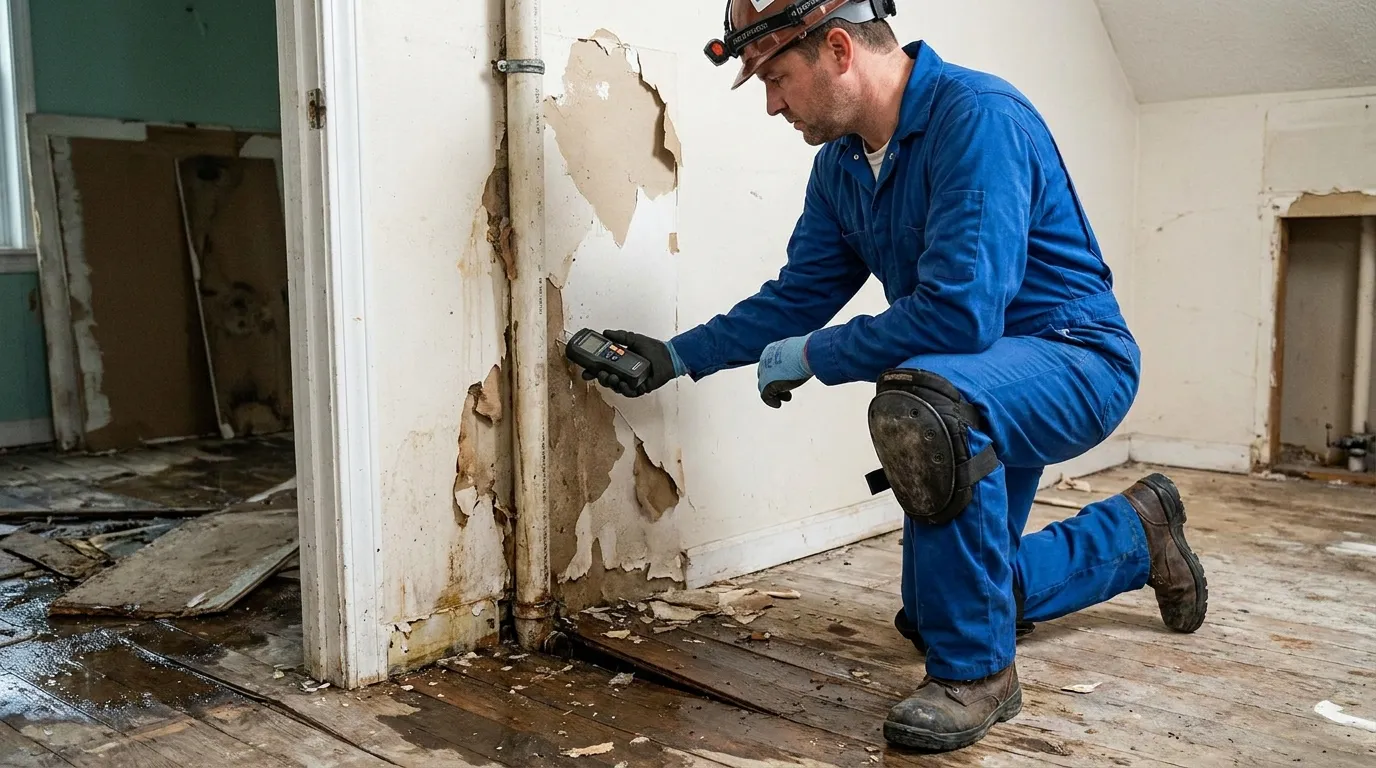
The first question a restoration technician asks on arrival is “what was the water source?” The answer determines everything that follows: the equipment, the PPE, the demolition scope, the chemistry, the disposal, and ultimately the cost. The IICRC water categories are how the industry organizes that decision. This guide walks through what each category means and how it shows up in your project.
The Three Categories
Category 1: Clean Water
Water from a sanitary source that poses no substantial risk to humans. Examples:
- Supply line breaks (potable water).
- Toilet tank overflow (above the bowl).
- Appliance fill hose failures (dishwasher, washing machine intake).
- Rainwater that has not contacted contaminated surfaces.
- Bottled water spills.
Category 1 water is the simplest to remediate. The water itself is clean; the work is drying. Carpet pad sometimes stays. Drywall is usually dried in place. Antimicrobial treatment is optional rather than required.
Category 2: Gray Water
Water with significant contamination that could cause discomfort or sickness if ingested. Examples:
- Dishwasher discharge.
- Washing machine drain water.
- Toilet bowl water (no waste content).
- Aquarium water.
- Punctured waterbeds.
- Hydrostatic pressure water from a hot water heater.
Category 2 requires antimicrobial treatment and more aggressive demolition. Saturated carpet pad almost always comes out. Drywall that has been wet for more than 24 hours is typically flood-cut.
Category 3: Black Water
Grossly contaminated water containing pathogens, toxins, or other harmful agents. Examples:
- Sewer backups.
- Toilet water with waste content.
- Outside flood water (river, storm runoff, rising groundwater).
- Any water that has come through soil or other contaminated substrate.
- Category 1 or 2 water that has stagnated for more than 72 hours in warm conditions.
Category 3 work requires full PPE, containment, and disposal of all porous materials that contacted the water. Carpet, pad, drywall, insulation, MDF/particleboard furniture, and contaminated personal items are typically discarded. The scope is significantly larger and the per-square-foot cost significantly higher than Category 1.
How Categories Change Over Time
Water categories degrade with time and conditions, not just original source. A clean supply line break is Category 1 in the first 24 hours. The same water that has soaked into contaminated carpet for 48 hours is Category 2. After 72 hours in a warm room with biological growth, it is Category 3.
This is why timing matters. A loss called in within 6 hours is often a Category 1 job. The same loss called in 4 days later may be a Category 3 job with three times the demolition scope.
For more on the first-hour response that protects category, see what to do in the first 24 hours.
What Category Means for Your Project
Equipment and PPE
- Category 1: Standard restoration equipment, basic PPE.
- Category 2: Antimicrobial agents, gloves and respirators, contained work area.
- Category 3: Full Tyvek suits, full-face respirators, dedicated negative-air machines, decontamination procedures, separate disposal pathway.
Demolition Scope
- Category 1: Minimal. Try-to-save approach on most materials.
- Category 2: Moderate. Pad and saturated insulation out, drywall flood-cut as needed.
- Category 3: Aggressive. All porous materials that contacted water are removed.
Documentation
Category 3 jobs require more documentation for insurance and regulatory reasons. We capture photo and video of every affected zone, every disposed material, and the source classification.
Cost
A Category 3 loss typically costs 2 to 4 times what an equivalent-volume Category 1 loss costs because of the demolition, disposal, and PPE requirements. See our water damage cost breakdown for ranges.
Insurance Coverage by Category
- Category 1: Almost always covered under standard homeowners.
- Category 2: Usually covered if from a covered source (sudden appliance failure).
- Category 3 from sewage backup: Requires sewer backup endorsement on the policy.
- Category 3 from outside flood: Requires flood insurance (NFIP or private).
- Category 3 from neglect: Often excluded entirely.
Understanding category before filing the claim helps you understand what coverage applies and what to ask your agent about.
What Homeowners Should Do
- Document the source before any cleanup begins.
- Stay out of Category 2 and 3 water entirely.
- Photograph everything, including the water source.
- Call a certified team that can classify and document properly.
Related Services
Bingham Restoration is IICRC-certified for all three water categories. Our water damage restoration services cover the full range. Call 520-FLOODED for an active loss.
Frequently Asked Questions
Who decides what category a water loss is?
The IICRC S500 standard defines the categories, and a certified restoration technician classifies the loss on arrival based on water source, contamination, and time elapsed. Insurance adjusters often defer to the restoration company's classification, though they may verify.
Can a Category 1 loss become Category 2 or 3?
Yes. Clean water that sits for more than 48 hours, or that contacts contaminated materials (carpet, insulation, organic debris), can degrade to Category 2. Long-standing water in warm conditions can reach Category 3.
Does category affect insurance coverage?
Indirectly. Category 1 and 2 are usually covered under standard policies. Category 3 from sewer backup typically requires a sewer backup endorsement. Category 3 from outside flood water requires separate flood insurance.
Need Emergency Restoration Right Now?
Our crews arrive in 48 minutes on average and bill your insurance directly.
Call 520-FLOODED